


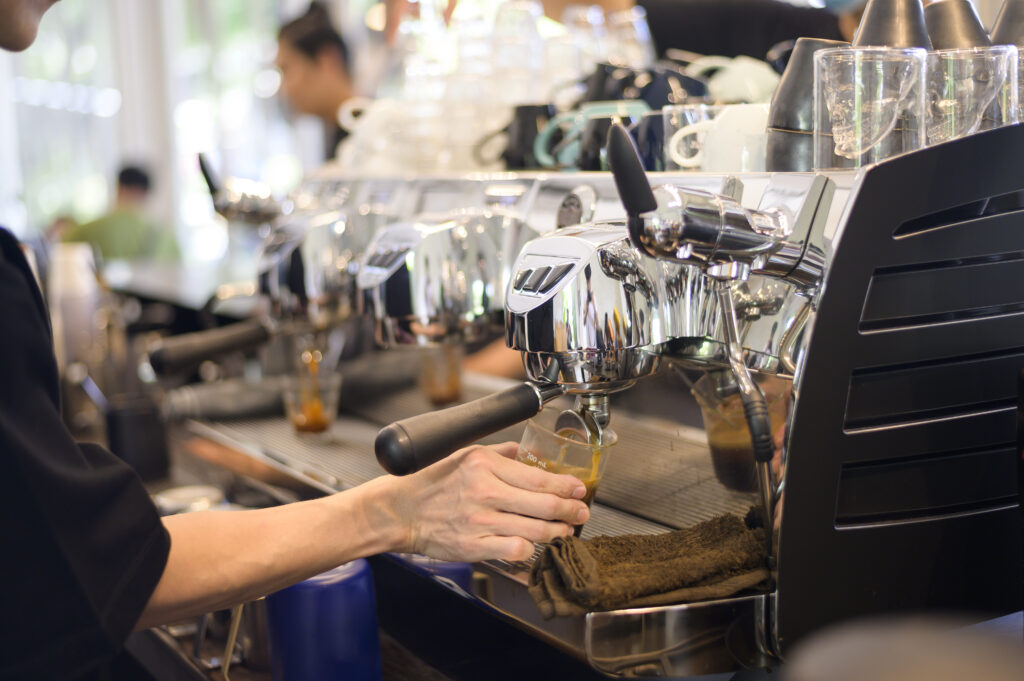
Choosing an espresso machine for your café is one of the most important equipment decisions you will ever make — and one of the most misunderstood. Walk into any coffee equipment showroom and you will be surrounded by impressive-looking machines with impressive-sounding specifications. The temptation is to buy the most feature-rich machine your budget allows, or to choose based on brand prestige, or to follow what the café down the road is using.
None of these are good decision frameworks.
The right espresso machine for your café is not the most expensive one, or the most well-known one, or the one your favourite specialty café in KL is using. It is the one that matches your specific volume, your menu, your team’s skill level, your physical space, and your realistic maintenance capacity.
This guide walks you through exactly how to think about that decision — practically, honestly, and without the showroom pressure.
Start With Volume — Everything Else Follows From This
The single most important variable in choosing a commercial espresso machine is how many espresso-based drinks you expect to produce per hour at peak service.
This is the question most first-time café owners either cannot answer or answer optimistically. Here is a realistic framework:
Low volume — under 50 cups per day. A small neighbourhood café, a boutique slow bar, a single-outlet concept in an office building or niche location. A well-specified single-group machine handles this comfortably.
Medium volume — 50 to 150 cups per day. A typical specialty café in a mall or high-footfall street location with a full espresso menu. A two-group machine is the standard here, giving you the ability to run two portafilters simultaneously during rush periods without temperature recovery issues.
High volume — 150 cups per day and above. A busy urban café, a hotel lobby bar, a multi-concept F&B space. A two-group machine at the high end of its specification range, or a three-group machine, is appropriate. Thermal recovery speed, boiler capacity, and steam power become critical at this volume.
Getting this wrong in either direction is costly. Under-specifying means your machine cannot keep up during peak hours, extraction quality drops, and your team is constantly fighting the equipment. Over-specifying means you are carrying maintenance costs and capital repayment on a machine built for a volume you never reach.
Be conservative with your opening projections. It is easier to upgrade a machine after eighteen months of proven volume than to service a loan on an over-specified machine from month one.

Single Boiler vs Heat Exchanger vs Dual Boiler — What Actually Matters
This is the specification distinction that confuses most first-time buyers. Here is a plain-language explanation of what each system means practically for your café.
Single Boiler
One boiler handles both espresso extraction and steam. To switch between pulling a shot and steaming milk, the machine must adjust its temperature — which takes time. In a busy café environment this is operationally impractical. Single boiler machines are suitable for very low-volume home use or filter coffee setups. They are not appropriate for a commercial café environment.
Heat Exchanger (HX)
A single large boiler maintains steam temperature. A copper pipe runs through this boiler to heat water for espresso extraction — the passing water reaches brew temperature by contact with the hot boiler walls. The practical advantage is that you can pull a shot and steam milk simultaneously. The limitation is that brew temperature is less precisely controllable than a dedicated brew boiler — the temperature of the passing water varies depending on how recently the machine was used and how long water has been sitting in the heat exchanger pipe.
HX machines are found across a wide range of commercial setups and can produce excellent coffee in skilled hands. They tend to be more affordable than dual boiler machines at comparable build quality.
Dual Boiler
Two completely separate boilers — one dedicated to espresso extraction at a precise, independently controlled brew temperature, one dedicated to steam. This is the professional standard for specialty coffee cafés because it gives you independent PID temperature control over each boiler, absolute simultaneous extraction and steaming capability without compromise, and faster shot-to-shot recovery.
For a specialty café where extraction temperature is a meaningful quality variable — particularly when working with light roast single origins that benefit from higher brew temperatures, or darker blends that extract better at lower temperatures — dual boiler is strongly recommended.
All of the professional machines Lighthouse Coffee supplies — including models from Nuova Simonelli, Victoria Arduino, El Rocio, and Crem — include dual boiler options across a range of specifications and price points.
One Group, Two Groups, or Three — How Many Do You Actually Need?
The number of group heads on your machine determines how many espresso shots you can extract simultaneously.
One group — one portafilter, one shot at a time. Appropriate for very low-volume setups, boutique slow bars where the preparation ritual is part of the experience, or a secondary machine in a larger operation. The El Rocio Ragen is a single-group machine that sits at the high end of what single-group machines can do — it is built for boutique commercial and serious home use, with pressure profiling and thermal stability that punches well above its group count.
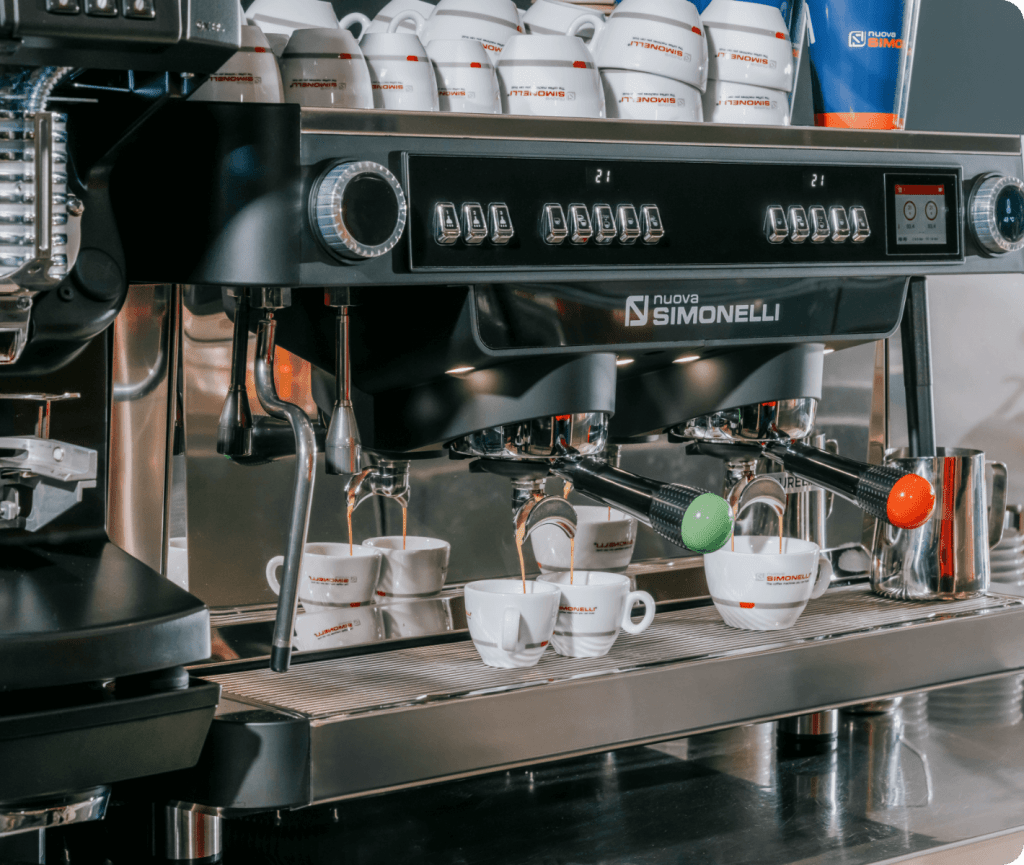
Two groups — the industry standard for most specialty cafés in Malaysia. Two baristas can work the machine simultaneously, or a single barista can pull and tamp the second portafilter while the first is extracting. At medium volume this is almost always the right choice.
Three groups — for high-volume operations only. The machine is wider, heavier, more expensive, and consumes significantly more power. Do not buy a three-group machine based on ambition — buy it based on demonstrated volume that your two-group machine can no longer handle.
The Brands — What Each One Is Known For
At Lighthouse Coffee we supply a range of professional espresso machine brands. Each has a distinct engineering philosophy and a segment of the market they are best suited to. Here is an honest overview:
Nuova Simonelli
One of Italy’s most established commercial espresso machine manufacturers, with a global reputation for reliability and serviceability. The Aurelia Wave and Appia Life are workhorses used in high-volume cafés worldwide. Nuova Simonelli machines are known for their consistency under pressure, their intuitive ergonomics, and a mature service network that means parts and technical support are widely available.
Best for: Medium to high-volume cafés that prioritise reliability and operational efficiency. A strong choice for café owners who want a proven Italian machine with a track record across demanding commercial environments.
Victoria Arduino
The premium expression of the Nuova Simonelli group. Victoria Arduino machines — particularly the Eagle One and Eagle One Prima — are engineered around Neo Extraction Optimisation (NEO) technology, which focuses on energy efficiency and thermal precision. They are stunning to look at and perform to a very high standard.
Best for: Specialty cafés where the machine is also a statement piece — where the visual presence on the bar is part of the brand. The Eagle One Prima is increasingly common in high-end specialty café environments in KL and Penang.
El Rocio
A South Korean manufacturer whose engineering philosophy centres on precise fluid control, temperature innovation, and barista-friendly interfaces. The El Rocio Ragen offers capabilities that no Italian machine at a comparable price point can match — a physical bypass variable pressure valve for live mid-shot pressure adjustment, a patented 4H temperature system that won Korea’s highest industrial technology award, multi-section digital profiling, and profile sharing via Android app.
The El Rocio Manus S is a more accessible two-group commercial machine that brings the brand’s thermal stability and build quality to a broader café market.
Best for: Specialty-focused cafés that want extraction control beyond what fixed-pressure machines offer. Café owners who value engineering innovation over heritage brand recognition. Boutique and slow bar setups where the Ragen’s single-group profiling capability is a genuine operational advantage.
Crem
A Swedish brand that has built a strong reputation in the professional market through machines that combine solid commercial-grade engineering with accessible pricing. Crem machines offer reliable dual boiler performance and good ergonomics without the premium associated with Italian heritage brands.
Best for: Café owners who need commercial-grade reliability at a more accessible price point. A practical choice for operators opening their first outlet who want solid performance without over-capitalising on equipment before volume is proven.
Key Specifications to Evaluate — a Practical Checklist
When you are comparing machines, these are the specifications that actually matter for a Malaysian café environment:
Boiler system — dual boiler is strongly recommended for any specialty café operation as discussed above.
Group head type — saturated or thermosaturation group heads maintain temperature more consistently than semi-saturated designs. For light roast and specialty coffee work this matters.
Pump type — rotary pump vs vibration pump. Rotary pumps are quieter, more durable, more stable under sustained use, and plumb-in compatible. Vibration pumps are cheaper and adequate for lower volume. For a commercial café, specify a rotary pump.
Steam boiler capacity — directly affects your ability to steam milk quickly and recover steam pressure between drinks. For a full espresso menu with milk-based drinks in a medium-volume café, a steam boiler of 7 to 11 litres is appropriate for a two-group machine.
Pre-infusion — the ability to wet the coffee puck at low pressure before full extraction pressure is applied. Reduces channelling, improves extraction evenness, and is particularly beneficial for light roast coffees. Most professional machines include some form of pre-infusion. The degree of control over it varies significantly.
Pressure profiling — the ability to vary extraction pressure across the shot. Once considered a specialist feature, it is increasingly standard in the specialty café segment. If you are working with a varied menu of single origins and house blends, pressure profiling gives your baristas meaningful control over flavour outcome.
Water connection — direct plumb vs reservoir. For a commercial café, direct plumb is strongly preferred. It removes the need to monitor and refill water tanks during service and provides more stable water pressure to the pump.
Electrical requirements — verify your premises’ electrical capacity before specifying a machine. Most professional two-group machines require a three-phase power supply at 3,000W and above. This needs to be confirmed with your electrician before purchase, not after.
Dimensions — measure your bar space carefully, including height clearance for cup warmers and depth relative to your bar counter. A machine that looks perfectly proportioned in a showroom can create serious workflow problems on a narrow bar.
Total Cost of Ownership — Beyond the Purchase Price
The machine’s purchase price is only one component of its cost to your business. A complete picture includes:
Installation — electrical work, plumbing, commissioning by a qualified technician. Budget RM500 to RM2,000 depending on the complexity of your bar setup.
Water filtration — essential and non-negotiable. A good filtration system costs RM800 to RM2,500 depending on the system and your local water hardness. Skipping this will cost you significantly more in boiler descaling, part replacement, and potential warranty issues.
Regular maintenance — daily cleaning chemicals, weekly backflush routines, periodic group head servicing, annual professional service. Budget approximately RM200 to RM500 per month for consumables and periodic professional service for a two-group machine in regular commercial use.
Barista training — a machine is only as good as the person operating it. Budget for proper SCA-certified barista training for your team. As an HRD Corp-registered provider, Lighthouse Coffee Academy can deliver this training in a way that is claimable for eligible Malaysian businesses — significantly reducing the net cost.
Spare parts availability — ask your supplier directly about local parts availability and typical lead times for common wear items (group head gaskets, shower screens, solenoid valves). For Italian brands, parts availability through Lighthouse Coffee is well-established. For El Rocio, we maintain local stock of key consumables as your authorised dealer in Malaysia.
Common Mistakes to Avoid
Buying based on brand prestige rather than fit. A La Marzocco or Victoria Arduino on your bar looks impressive. It is also a significant capital investment. If your volume does not justify the specification, or your team is not trained to operate it properly, the investment does not pay off.
Skipping the water filtration system. This is the single most common and most expensive shortcut. Hard water will damage your boilers, void your warranty, and degrade your coffee quality. The filtration system is not optional.
Over-specifying on launch. Start with what your opening-month volume justifies, not your year-three ambition. Equipment can be upgraded. A loan on an over-specified machine cannot be wished away.
Buying without local service support. An espresso machine that breaks down in the middle of a Saturday morning rush, with no local technician available for two weeks, is a crisis. Buy from a supplier who can support you locally — with parts, with technical advice, and with service — not just complete the transaction.
Ignoring ergonomics. The height of the group head, the placement of the steam wand, the weight of the portafilter, the position of the drain tray — these details determine whether your baristas can work comfortably and efficiently through a six-hour service. Wherever possible, have your lead barista use the machine before you buy it.
How Lighthouse Coffee Can Help
Choosing the right espresso machine is a decision we help café owners make every week. We supply professional machines from Nuova Simonelli, Victoria Arduino, El Rocio, and Crem — and we have no interest in selling you a machine that does not fit your operation. A mismatched machine creates problems for you, and we are in a long-term supply relationship with every café we work with.
When you engage with us on equipment, we will ask you about your projected volume, your menu, your team’s experience level, your space, your electrical capacity, and your budget — and we will recommend accordingly. We also support your team with barista training, maintenance guidance, and ongoing technical support as your authorised local dealer.
If you are evaluating espresso machines for a new café or an upgrade, WhatsApp our team or send us an enquiry here. We will arrange a conversation — and where possible, a demonstration — at our facility in Penang.