


Why Your Barista Won’t Steam Milk Above 70°C (And Why It Matters for Your Coffee)
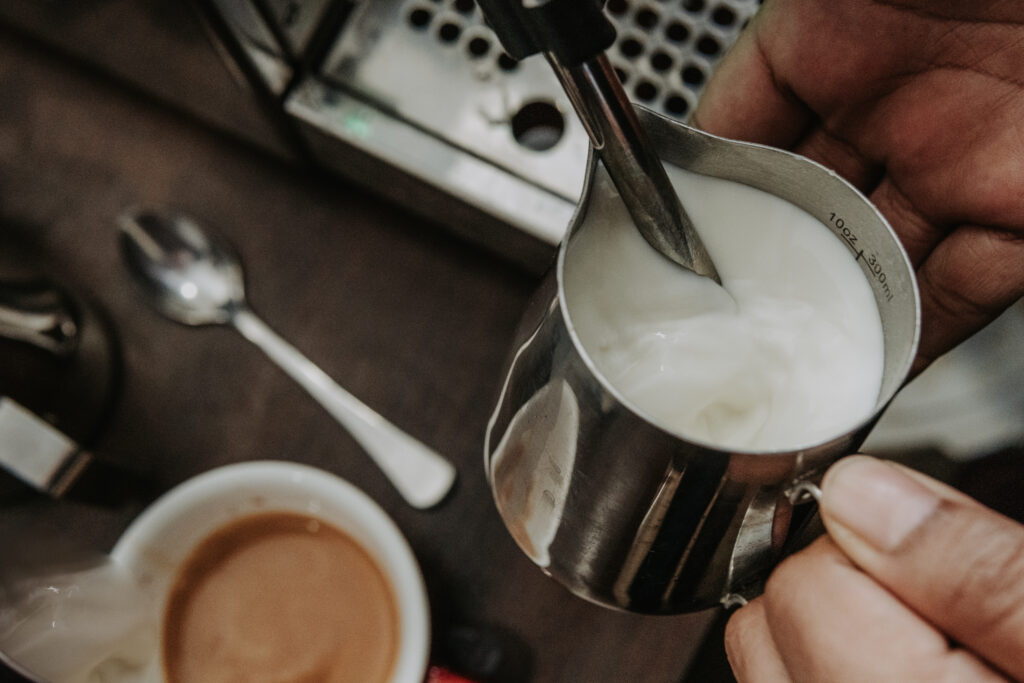
“Extra hot, please.” — Sound familiar?
If you’ve ever ordered a latte and asked for it extra hot, you’re not alone. It’s one of the most common requests baristas hear every day. And while we completely understand the desire for a drink that stays warm, there’s an important reason why specialty coffee bars — including us here at Lighthouse — won’t steam milk above 70°C.
It comes down to science. And once you understand it, you’ll never look at your cup the same way again.
The Sweet Spot: 55°C to 65°C
Milk has an ideal temperature window, and it sits between 55°C and 65°C. This isn’t an arbitrary number — it’s the range where three things happen simultaneously:
Texture is at its creamiest. Within this window, milk proteins behave exactly as they should. They stretch and wrap around air bubbles, creating the silky, glossy microfoam that defines a well-made flat white or latte.
Natural sweetness peaks. Lactose — the natural sugar found in milk — is most perceptible to your taste buds at this temperature range. A properly steamed milk should taste gently sweet on its own, with no sugar added.
Foam stays stable. At 55–65°C, the foam structure holds long enough for your barista to pour latte art and serve it to you with consistent texture from the first sip to the last.
This standard is recognized globally by the Specialty Coffee Association (SCA) — not just something we decided on our own.
What Happens Above 70°C
Here’s where things go wrong — and quickly.
Milk proteins break down
Milk contains whey proteins, including one called β-lactoglobulin. When heated within the right range, these proteins help create smooth, stable foam. But push past 70°C and they clump together instead. The result is flat, grainy texture that collapses fast — nothing like the velvety microfoam you’re paying for.
Natural sweetness disappears
Lactose becomes less perceptible at higher temperatures. What you’re left with is a flat, sometimes slightly sulphurous aftertaste — that unmistakable “burnt milk” flavour. No amount of syrup can fix milk that’s been scorched.
Your espresso flavor is lost
This one surprises a lot of people. Superheated milk doesn’t just affect itself — it overwhelms everything in your cup. All those delicate notes your barista worked to extract — the chocolate, the fruit, the nuttiness — get completely drowned out. You’d essentially be drinking very hot, bitter milk at specialty coffee prices.
But I Just Want It to Stay Warm
Completely valid. Here’s the good news: temperature retention is about preparation, not just raw heat.
A pre-warmed cup, the right steaming temperature, and serving your drink immediately makes a bigger difference than you’d expect. At Lighthouse, our baristas pre-warm cups as part of our standard process — so your drink holds its warmth without sacrificing texture or flavour.
Next time you’re in, just ask us to pre-warm your cup. Simple fix, genuinely big difference.
Every Degree Is a Decision
Steaming milk well isn’t a small thing. It requires practice, consistency, and an understanding of what’s happening inside the pitcher. Our baristas steam with precision on every single cup — not because of rigid rules, but because we know it directly affects what ends up in your hands.
Good coffee is the result of a hundred small decisions made correctly. Milk temperature is one of them.
The Takeaway
| Temperature | What Happens |
|---|---|
| Below 55°C | Foam unstable, fat not fully expressed, weak flavour |
| 55°C – 65°C | Sweet spot — creamy, sweet, stable, flavourful |
| Above 70°C | Proteins break down, sweetness gone, espresso overwhelmed |
So the next time your barista hands you a drink that doesn’t feel scalding hot, know that it was made that way on purpose — for you.
We’re not saying no to extra hot. We’re saying yes to the best version of your drink.
Have questions about how your coffee is made? Visit us at Lighthouse Coffee Roastery & Academy in Penang, or drop your questions in the comments below. We love talking coffee.