


Flat White vs Latte: What’s Actually Different (And Why It Matters)
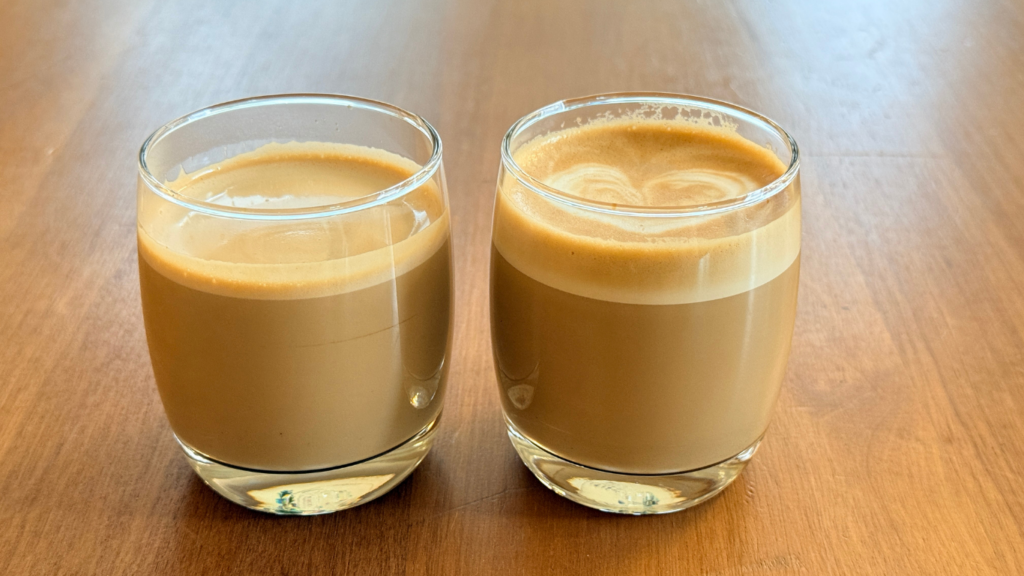
If you’ve ever stood at a café counter, pointed at the menu and wondered what actually separates a flat white from a latte — you’re not alone. The two drinks look similar, arrive in similar cups, and even taste similar in many cafés. But order a flat white at a specialty café in Melbourne, and you’ll quickly understand why baristas in Australia and New Zealand take the distinction very seriously.
In this post, we break down the real differences between a flat white and a latte — the espresso, the milk, the ratios, and the texture. We also look at why the distinction gets blurry in Malaysia, and what you should be asking for the next time you order.
The short answer: same ingredients, very different intentions
Both a flat white and a latte use espresso and steamed milk. That’s where the similarity ends.
The flat white is built around a double ristretto — a shorter, more concentrated espresso pull that tastes sweeter and more intense than a standard shot. It sits in a smaller cup (typically 150–165ml), paired with a thin layer of velvety microfoam. The result is a drink where coffee leads and milk supports.
The latte uses a standard double espresso in a larger cup (220–300ml or more), with a thicker, creamier foam layer on top. The higher milk volume softens the coffee’s intensity, producing a rounder, more approachable drink.
| Flat White | Café Latte | |
| Size | 150 – 165ml | 220 – 300ml+ |
| Espresso base | Double ristretto | Double espresso |
| Milk texture | Thin, glossy microfoam | Thick, creamy microfoam |
| Foam layer | None to 3 – 5mm (integrated) | 5 – 10mm foam cup |
| Coffee-to-milk ratio | Higher ⏤ coffee-forward | Lower ⏤ milk-forward |
| Mouthfeel | Intense, silky, clean | Soft, round, silky |
A flat white asks you to taste the coffee. A latte invites you to enjoy the milk.
The ristretto — the detail most cafés skip
The single most important difference between a properly made flat white and a latte isn’t size. It’s the ristretto.
A ristretto uses the same amount of ground coffee as a regular espresso but extracts with significantly less water — roughly half the volume. This produces a shot that is more concentrated, naturally sweeter, and lower in bitterness. When paired with the smaller milk volume of a flat white, the coffee character isn’t diluted — it comes through clearly in every sip.
A standard double espresso, as used in a latte, is extracted to full volume. It’s still excellent coffee — but in a larger, creamier drink, the espresso becomes one note among many rather than the centrepiece.
→ This is why ordering a flat white at a café that doesn’t pull a ristretto will taste like — and essentially is — a small latte.

The milk texture question: no foam or thin foam?
Ask ten baristas what the foam on a flat white should look like and you’ll get at least three different answers. This is one of the drink’s longest-running debates.
The no-foam argument
Some baristas — particularly those trained in the Australian tradition — argue the flat white should have a completely flat surface. No foam cap. Just microfoamed milk integrated so thoroughly into the espresso that the surface reads smooth. The name itself, this camp argues, means exactly what it says: flat.
The thin microfoam argument
Others describe the flat white as having a very fine layer of microfoam — perhaps 3 to 5mm — that sits invisibly on the surface. Not dry froth. Not a cappuccino dome. Just a thin skin of texture that’s almost indistinguishable from the milk below it.
Where they agree
Both camps agree on what a flat white is not: no thick foam cap, no dry froth, no layered texture. The milk should feel silky and integrated, not airy or separated. In practice, the difference between ‘no foam’ and ‘thin microfoam’ is so small that most drinkers cannot detect it. What matters is the quality and integration of the steam — and that the milk never overwhelms the espresso.

Where did the flat white actually come from?
This is the question that launched a thousand arguments — and remains officially unresolved.
Both Australia and New Zealand claim to have invented the flat white, and both have credible evidence. The earliest documented menu appearance of the drink is traced to Sydney in 1985 at a café called Moors Espresso Bar. However, baristas in Auckland have argued persuasively that the drink was being made in New Zealand around the same period — simply without the same paper trail.
The more likely truth is that the flat white emerged independently in both countries at roughly the same time, shaped by the same cultural conditions: Italian espresso influence, a thriving independent café scene, and a consumer appetite for something between a strong black coffee and the oversized milky drinks that had become standard.
Nobody filed a patent. The flat white grew organically — which is precisely why both countries feel such ownership over it.
The dispute gained global attention in 2015 when Starbucks launched the flat white across its international locations, adding yet another interpretation to an already contested drink. Their version — with a slightly domed microfoam top and a standard double ristretto — satisfied neither Australians nor New Zealanders, but introduced millions of new drinkers to the drink’s name.
The Malaysian reality: where most flat whites are small lattes
In Malaysia, the flat white sits on almost every specialty café menu. But order one and you’ll often receive something that — however delicious — isn’t technically a flat white in the traditional sense.
The most common gap is the ristretto. Many Malaysian cafés pull a standard double espresso for their flat white, use the same milk texture as their latte, and simply serve it in a smaller cup. The drink tastes fine. But without the ristretto as its foundation, the coffee-forward character that defines the flat white doesn’t fully materialise.
This isn’t a criticism — it’s a reflection of how quickly café culture has grown in Malaysia. The flat white’s name and aesthetic arrived faster than the technique behind it. As more baristas receive specialist training and as specialty coffee education continues to grow, the gap between menu listing and proper execution is closing.
→ A simple test: ask your barista whether the flat white uses a ristretto. Their answer will tell you a great deal about the café’s approach to coffee.
How to order a flat white that’s actually a flat white
If you want to experience the drink as it was intended — coffee-forward, velvety, intense — here’s what to look for:
Ask for a ristretto base. Any café that pulls ristrettos will know exactly what you mean, and will likely appreciate the question. Ask about milk texture. A good flat white should feel silky and light in the mouth — not creamy, not foamy, not flat. Choose a café that cares about ratios. A flat white in a 200ml cup is probably a latte with a rebrand. The right size is around 150–165ml.
Beyond that — taste it. A properly made flat white should lead with coffee. If you’re tasting mostly milk, something in the ratio or technique has drifted toward latte territory.
The bottom line
A flat white and a latte are not the same drink — even if many cafés serve them that way. The difference lives in the ristretto, the milk texture, and the ratio between them. Get those three things right, and the flat white becomes something distinct: more intense, more precise, more demanding of attention.
That precision is what makes the debate worth having. And it’s what keeps Australians, New Zealanders, baristas, and coffee drinkers arguing about it to this day.
We offer SCA-certified barista training and specialty coffee education. Visit us at Our Academy