


Why Freshly Roasted Coffee Isn’t Always Ready to Drink
The degassing period catches almost everyone off guard. Here’s what’s actually happening inside your bag — and how to get better coffee by simply knowing when to brew.
You walk into a specialty coffee roastery. You pick up a bag printed with last week’s roast date. The barista smiles and tells you it’s as fresh as it gets. You get home, dial in your grinder, pull your shot — and it tastes flat. Hollow. Maybe a little sour.
Sound familiar?
Here’s the thing: the beans aren’t bad. The roaster didn’t make a mistake. And neither did you. What you’re experiencing is one of the most misunderstood parts of the coffee journey — the degassing period. And it’s something that almost nobody talks about at the point of purchase.
In this guide, we’ll break down exactly what happens inside roasted coffee beans after they leave the drum, why brewing too early (or too late) affects your cup, and how to time your brews to hit peak flavor every single time.
Section 1: What Is Coffee Degassing — And Why Does It Happen?
The science behind the gas
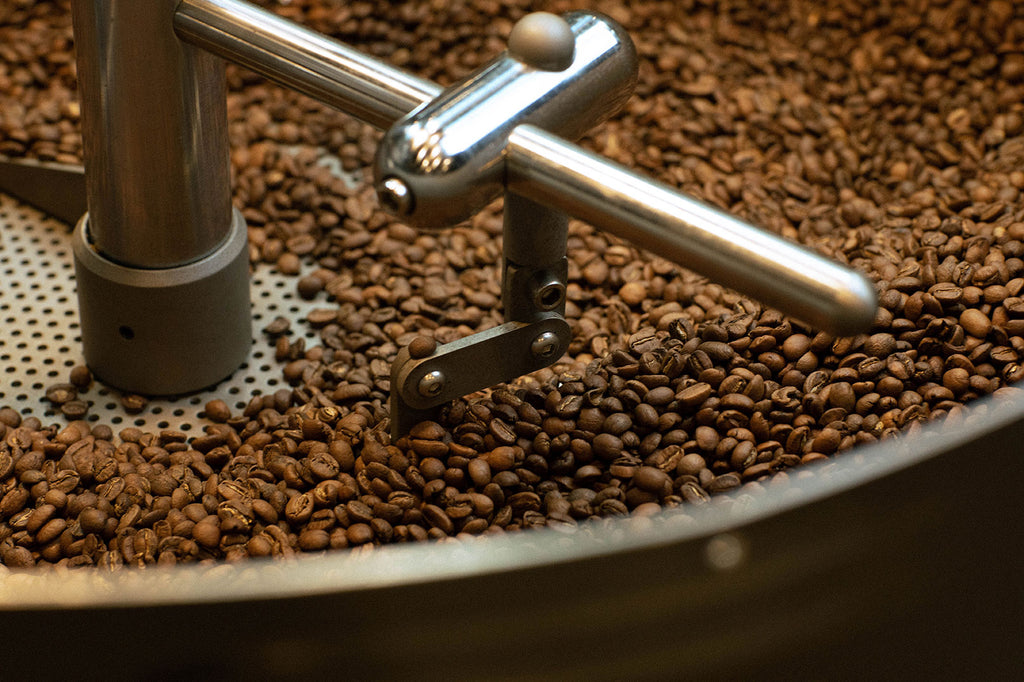
When coffee is roasted, the beans undergo a dramatic chemical transformation. Sugars caramelise. Acids develop. Aromatic compounds form. And throughout this process, the beans absorb large quantities of carbon dioxide (CO₂) — a natural by-product of the roasting reactions happening inside each bean.
Once the roast ends and the beans begin to cool, that CO₂ doesn’t simply stay put. It starts escaping — slowly, steadily, through the cell walls of the bean. This process is what we call degassing, or off-gassing. It begins the moment roasting ends and continues for days, sometimes weeks, depending on several variables.
Definition: Degassing (off-gassing)
The gradual release of carbon dioxide (CO₂) from roasted coffee beans after roasting. An ongoing natural process that directly affects extraction quality and flavor in the cup.
Why roast level changes the timeline
Not all beans degas at the same rate. Roast level plays a significant role:
- Light roasts are denser in cell structure. CO₂ escapes more slowly, meaning the beans need more rest time before they’re ready to brew well.
- Dark roasts develop a more porous, open cell structure during roasting. Gases are released faster, so these beans are generally ready sooner.
- Medium roasts sit somewhere in between — and are often the most forgiving in terms of timing.
This is why roast level and brew method are deeply connected when it comes to rest time — a point we’ll explore in detail in Section 2.

Section 2: How CO₂ Affects Your Brew — And Why Fresh Isn’t Always Better
What happens when you brew too early
Carbon dioxide and water don’t mix well during extraction. When beans are still heavily loaded with CO₂, several things go wrong in the cup:
- CO₂ repels water, physically blocking even contact between the water and the coffee grounds. This leads to uneven, incomplete extraction.
- The resulting cup often tastes sour, hollow, or flat — not because of bad technique, but because extraction was disrupted at the molecular level.
- In espresso, the crema may look impressive — thick and voluminous — but it collapses quickly and lacks the fine, persistent texture of a properly rested shot.
- In pour-over and filter brewing, the bloom (the initial 30–45 second pre-wet stage) will be excessively aggressive, rising sharply and unevenly as CO₂ rapidly escapes when hot water hits the grounds.
KEY INSIGHT
A dramatic bloom during your pour-over isn’t always a sign of great freshness. It can be a sign that your beans needed more rest. True freshness is about flavour readiness, not just roast date proximity.
The wait window by brew method
How long you should rest your beans depends on both the brew method and the roast level. Here’s a practical guide:
| Brew Method | Roast Level | Recommended Wait |
| Espresso | Medium–Dark | 7–14 days post-roast |
| Filter / Pour-over | Light–Medium | 7–14 days post-roast |
| French Press | Medium–Dark | 3–7 days post-roast |
Important note: filter and pour-over are almost always brewed with light to medium roast coffee. Because light roasts degas more slowly, they often need just as much rest time as espresso — sometimes more. Don’t assume filter coffee is ready to drink immediately just because it feels less pressure-sensitive than espresso.
Section 3: The Best Before Window — Quality Fades, Not Safety
Freshly roasted doesn’t mean drink immediately. And it doesn’t mean drink forever.
One of the most important distinctions in specialty coffee — and one that often gets lost in the marketing around “freshness” — is the difference between a roast date and a best before window.
Roasted coffee doesn’t expire in the way that dairy or fresh produce does. There is no food safety concern with coffee that’s been sitting in a sealed bag for several months. What changes is quality — specifically, the complexity, aroma, and vibrancy of flavor that make specialty coffee worth buying in the first place.
SCA GUIDELINE
The Specialty Coffee Association recommends whole bean coffee is best enjoyed within 3 months of the roast date. After this window, quality gradually fades — but this is about flavour, not food safety. Some commercial roasters print up to 12 months on their packaging, but the specialty standard for peak quality is 3 months.
When peak flavour actually occurs
Within that 3-month window, there’s a tighter period where the beans are at their absolute best. This is the zone you want to be brewing in:
| Brew Method | Roast Level | Peak Flavour Window |
| Espresso | Medium–Dark | Day 7 → Day 21 |
| Filter / Pour-over | Light–Medium | Day 7 → Day 21 |
| French Press | Medium–Dark | Day 3 → Day 14 |
After these windows, oxidation gradually takes over. The bean’s cell structure continues to break down, aromatic compounds dissipate, and the oils that carry much of a coffee’s character begin to go stale. The coffee is still drinkable — but it won’t represent what the roaster intended.
What this means for café owners
For café operators, understanding the best before window matters operationally. Ordering in large quantities and holding stock for weeks before opening the bag means you may be serving coffee past its peak without realising it. A better approach is to order more frequently in smaller quantities, track roast dates closely, and aim to use each bag within its optimal window.
Knowing this also helps you have more informed conversations with your customers — setting expectations about freshness, timing, and why what’s on the shelf today might actually be better than what you get the day the beans arrive.
Section 4: Reading Your Coffee Bag — What Packaging Tells You About the Roaster
The valve (and everything it signals)
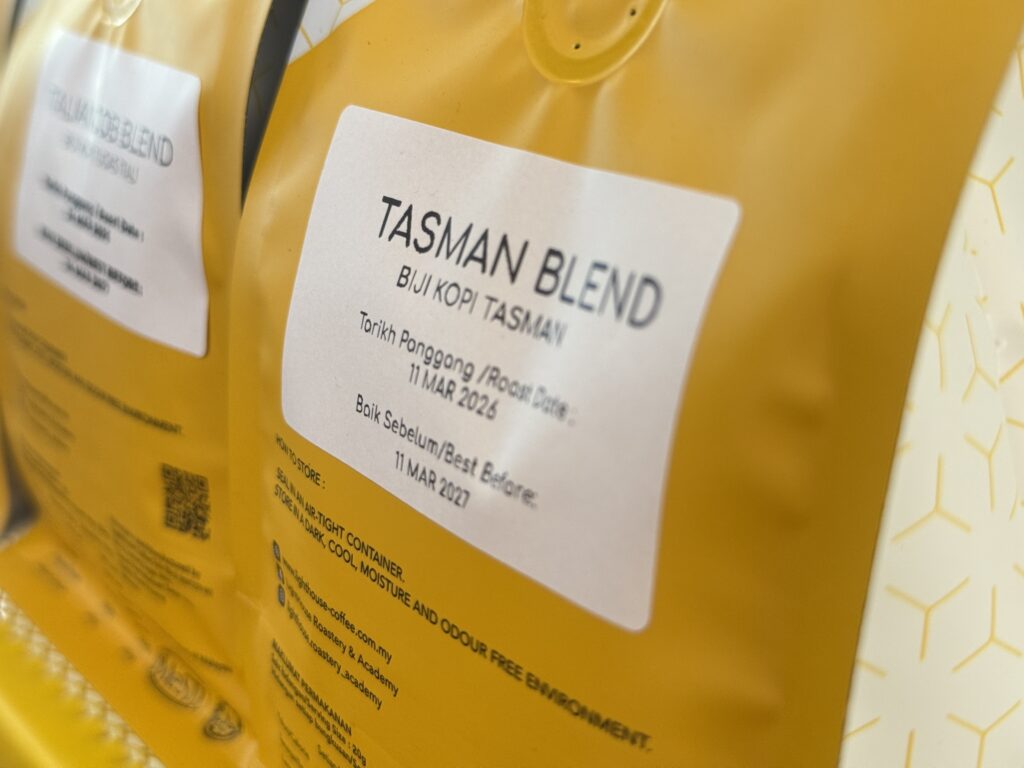
Most specialty coffee bags feature a small circular valve on the front or back. This one-way degassing valve is one of the most practical pieces of coffee packaging design — and understanding it tells you something about how seriously the roaster thinks about freshness.
But not all bags are the same. Here’s what the different packaging approaches mean:
① One-way degassing valve
The classic solution. CO₂ can escape from inside the bag, but oxygen cannot enter. This keeps beans fresh while allowing active degassing to continue after sealing. Common in most specialty roasteries.
② Nitrogen flush (with or without valve)
Some roasters displace the oxygen inside the bag with nitrogen gas before sealing — a process that dramatically slows oxidation. Nitrogen-flushed bags may or may not have a one-way valve, depending on the roaster’s approach. This is common in commercial-scale roasteries and some retail specialty brands.
③ Valve covered with a sticker
Sometimes you’ll find a bag with a valve that’s been sealed with a sticker. This is typically a deliberate packaging choice around degassing management or shelf life — not necessarily a sign that the beans were fully rested before packing. It reflects the roaster’s decision about how they want to manage gas release and freshness for that particular product.
④ Valve + nitrogen flush
The most protective approach. Combining nitrogen flushing with a one-way valve gives layered freshness protection — removing oxygen at packing and allowing continued degassing after sealing. Used by roasters who prioritize long shelf stability without compromising quality.
THE BOTTOM LINE
No single packaging method is universally superior. What matters is whether the roaster matched their packaging approach to the coffee’s degassing and storage needs. Flip the bag over next time you buy. The details are there if you know how to read them.
One more thing: always check the roast date
The single most useful piece of information on any specialty coffee bag is the roast date — not the best before date, not the harvest date, but the roast date. It tells you exactly where you are in the degassing timeline, and it lets you plan your brewing accordingly.
If a bag doesn’t have a roast date printed on it, that’s worth noting. Specialty roasters who are serious about quality will always include it.
The Takeaway: Timing Is a Skill
Buying freshly roasted coffee is a great start — but it’s only part of the picture. Knowing when to open the bag, when to start brewing, and when you’re in the peak flavour window is what separates a good cup from a great one.
Great baristas treat rest time the same way they treat grind size or extraction ratio: not as a fixed rule, but as a variable to understand, dial in, and use intentionally. The degassing period isn’t an inconvenience. It’s part of the craft.
Whether you’re brewing at home or running a café, the principles are the same: roast level affects rest time, brew method affects readiness, and quality fades gradually — not suddenly. Work with the timeline, and the coffee will reward you for it.
READY TO GO DEEPER
Learn to read your coffee at every stage of the process.
The SCA Barista Skills Foundation course at Lighthouse Coffee Roastery & Academy covers the science of extraction, grind calibration, milk technique, and — yes — how rest time, roast level, and brew method all connect. It’s the foundation every serious coffee person needs, whether you’re brewing at home or behind a bar.
Upcoming intake is now open. → Contact us to register or find out more.