


Water Is the Most Expensive Part of Your Espresso Machine
Most people spend a lot of time comparing espresso machines — brand, pressure, boiler type, grinder pairing. But there is one thing almost nobody thinks about. Water.
This is not a minor detail. Water makes up more than 90% of a cup of espresso. It does not matter how good your grinder is or how carefully you sourced your beans. If the water going into your machine has quality issues, the coffee coming out will too. And the problem goes beyond flavour. Bad water damages your equipment from the inside, slowly, over time.
Penang Water Is Not as Friendly to Coffee Equipment as You Think
Penang sits in a soft water zone, but soft does not mean clean, and it certainly does not mean suitable for coffee. Tap water still carries chlorine, fine particulates, and various substances that affect taste. Inside a coffee machine’s boiler, these things accumulate over time and form scale and sediment deposits.
This is not theoretical. It is something we have seen firsthand through our work with clients. Poor water management means your machine absorbs all the consequences on your behalf.

What Is BWT?
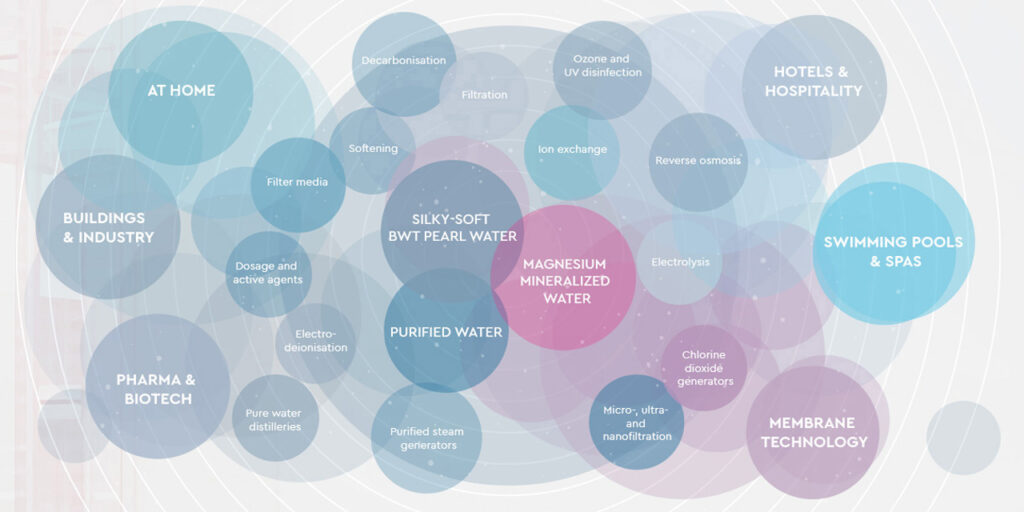
BWT stands for Best Water Technology. Headquartered in Austria, it is Europe’s largest water technology company, serving the food and beverage, hotel, hospital, and pharmaceutical industries for over 30 years worldwide.
BWT is not selling the kind of basic filter you pick up at a supermarket. Their systems are purpose-built for specific applications and water conditions. The product range that Lighthouse Coffee supplies is the BWT Woda-Pure Series, developed and manufactured by BWT Wassertechnik in Germany, designed as a modular filtration system that can be configured to match different water quality needs.
What Does BWT Woda-Pure Actually Do?
Three things.
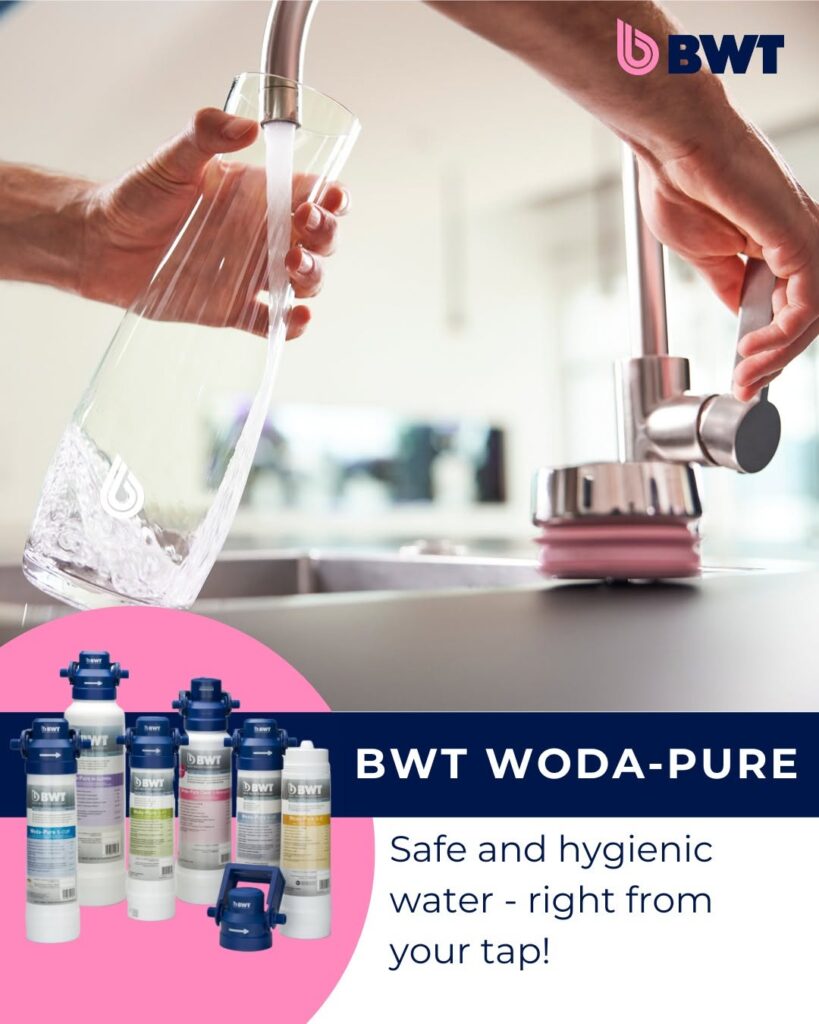
It removes what should not be there. Chlorine, particulates, bacteria — all filtered out before water enters your equipment. In espresso, where extraction is concentrated, contaminants in the water are amplified in the cup. You can taste them.
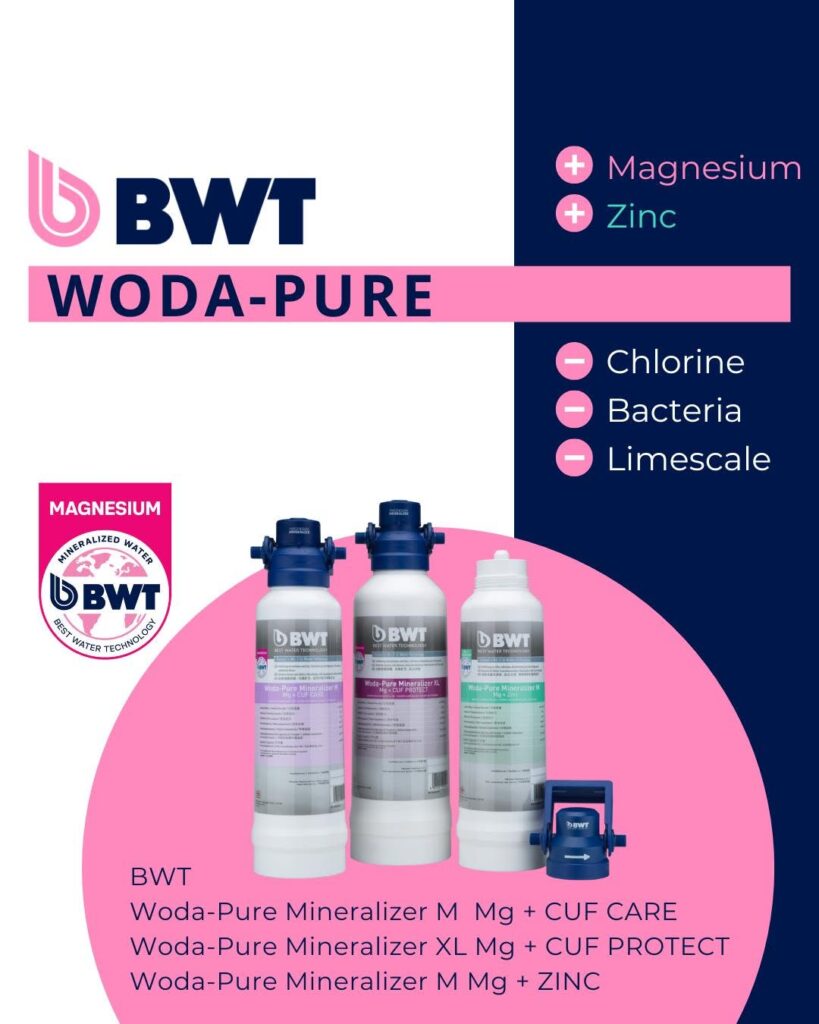
It gets the mineral balance right. Water that is too soft and water that is too hard are both problems for coffee. Proper extraction requires a certain mineral presence in the water to draw out aroma and sweetness from the coffee. BWT Woda-Pure’s Mg²⁺ Mineralizer technology filters the water while simultaneously introducing the right amount of magnesium, bringing water quality closer to the ideal range for coffee brewing. For pour over and filter coffee, this matters even more — clean is not enough.
It protects your equipment. Scale buildup is one of the most common causes of wear in commercial espresso machines. It blocks internal pathways, disrupts temperature stability, reduces boiler efficiency, and shortens the lifespan of equipment that cost you a significant investment. Woda-Pure addresses this before the water ever reaches the machine.
The Woda-Pure Range: Modular by Design
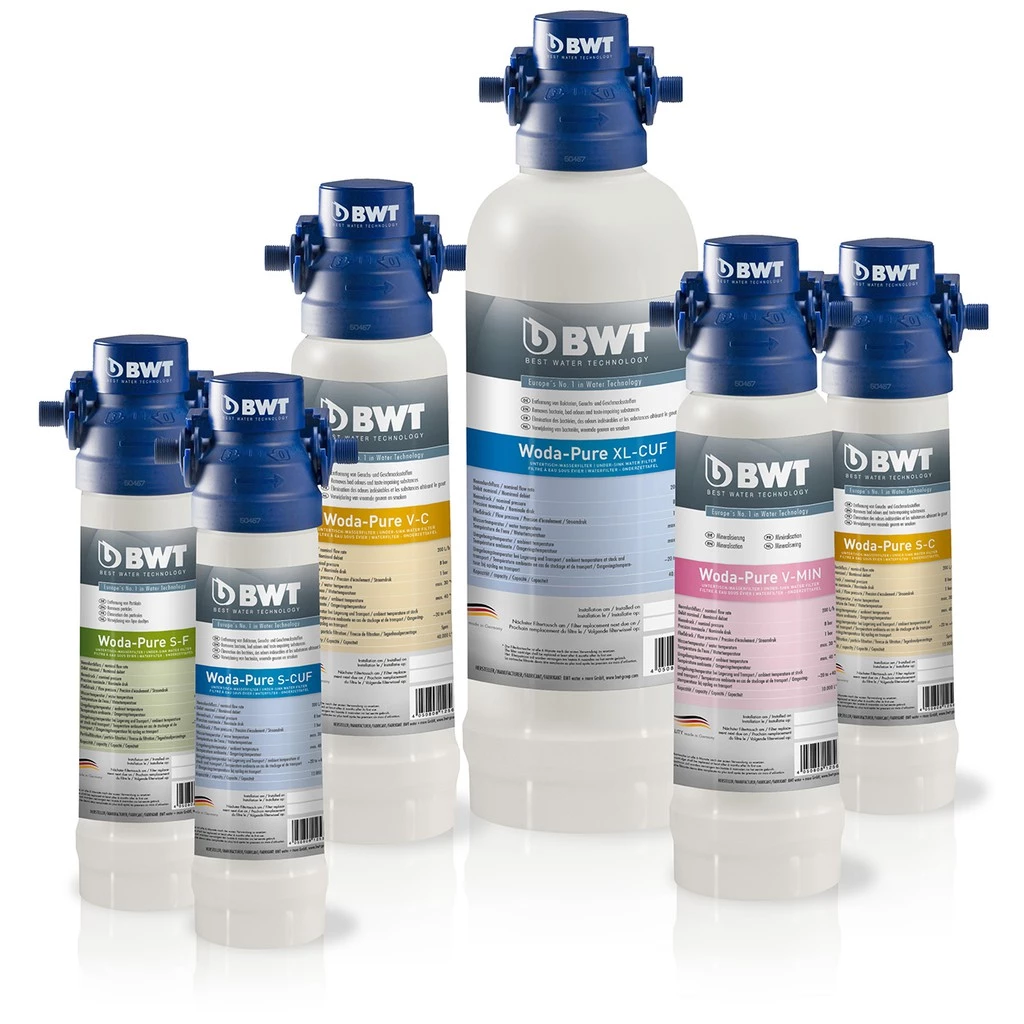
One of the practical advantages of Woda-Pure is that it is a modular system. Rather than a fixed one-size-fits-all setup, you choose or combine cartridges based on your actual water conditions and operational needs. Here is how the main categories break down:
Anti-Particles (S-F1 / S-FS) removes particles and suspended solids from the water. Typically used as a first-stage pre-filter.
Anti-Chlorine (S-C / V-C) uses high-performance activated carbon to eliminate chlorine, odour, and taste-impairing residual substances. Produces water with noticeably better sensory quality.
Anti-Bacterial (S-UF / V-UF3) incorporates a hollow-fibre ultrafiltration membrane for effective bacteria removal. Suited to environments with higher hygiene requirements. Capacity up to 40,000 litres.
All in One (S-CUF / XL-CUF) combines the functions above into a single cartridge — chlorine removal, odour reduction, particulate filtration, and bacteria protection. This is the most common choice for cafes and food service environments. S-CUF handles up to 12,000 litres; XL-CUF up to 40,000 litres.
Anti-Limescale + Mg²⁺ Mineralizer (Clear V / M / XL) addresses scale formation while enriching the water with magnesium minerals. Directly improves coffee and tea flavour while protecting hot water appliances. Available in three capacity sizes: Clear V at 2,500 litres, Clear M at 3,800 litres, and Clear XL at 6,100 litres.
Soft Min M is designed specifically for soft water zones or as a post-treatment stage after reverse osmosis systems. It re-mineralises treated water using naturally occurring minerals including calcium and magnesium, restoring balance that gets stripped out during filtration. If you are operating in Penang and running an RO system, this one is worth paying attention to.

What This Means for Your Business
A good commercial espresso machine is a significant investment, often running into tens of thousands of ringgit. A single repair visit can already cost more than several filter cartridge replacements. That is before factoring in downtime and the revenue that comes with it.
More importantly, you are selling coffee. Water problems create inconsistency in the cup. Customers may not be able to identify the cause, but they notice it. Good one day, slightly off the next. That kind of inconsistency is harder to fix than consistently bad coffee, because you cannot trace the source.
A proper filter system is not an optional accessory. It is what allows your equipment to perform the way it was built to.
FAQ: What You Should Know About BWT Woda-Pure
How often does the filter need to be replaced?
According to BWT’s official guidelines, cartridges must be replaced at least every 6 months, regardless of remaining capacity. If the equipment has been shut down for more than 4 weeks, the cartridge must also be replaced before resuming use. Whichever condition comes first applies. Once a filter reaches the end of its service life, there is no obvious warning — water quality drops quietly, and so does the protection your machine relies on.
Is replacing the cartridge complicated?
No. Woda-Pure cartridges are designed for straightforward replacement and do not require a technician to be present for routine changes.
Does having a filter mean I no longer need to maintain my machine?
No. A filter is a protective measure, not a substitute for machine maintenance. Regular cleaning and descaling still need to happen. The two serve different purposes and neither replaces the other.
How do I know which configuration is right for my setup?
The right cartridge combination depends on your water conditions, your daily volume, and your primary concern — whether that is flavour, equipment protection, or both. Espresso machines, pour over setups, and drinking water points each have different requirements. If you are unsure, reach out to us directly and we can help assess what makes sense for your space.
What is the difference between a supermarket filter and BWT Woda-Pure?
A standard supermarket filter removes basic chlorine and sediment. It is designed for household use and low volume. BWT Woda-Pure is built for commercial environments — higher filtration precision, significantly larger capacity, and the option to add mineralisation. That last part is what most commercial coffee equipment actually needs, and what basic filters do not offer.
Want to find out which configuration suits your setup
WhatsApp us: +60 16-587 2728
Related Link
Why Your Café or Restaurant Needs a Halal-Certified Water Filter