


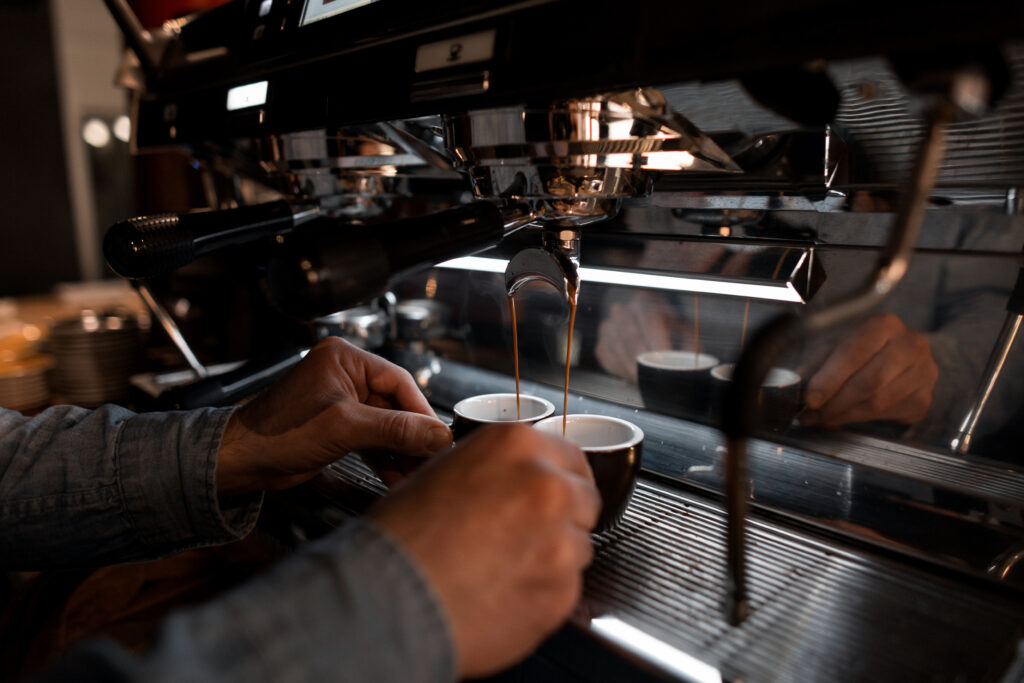
Espresso looks deceptively simple. Thirty millilitres of concentrated coffee, extracted in roughly 25 to 30 seconds. How complicated can it be?
Ask any barista who has spent serious time behind the machine and they’ll tell you — espresso is one of the most technically demanding things to do consistently well. A tiny change in grind size, dose, or tamping pressure can shift the cup from silky and sweet to harsh and bitter in seconds.
The good news is that consistency isn’t magic. It’s method. These five tips come directly from what we teach in our SCA Barista Skills training at Lighthouse Coffee Academy — fundamentals that separate baristas who pull good shots occasionally from those who pull great shots reliably.
Tip 1 — Always Start With a Clean and Dry Portafilter
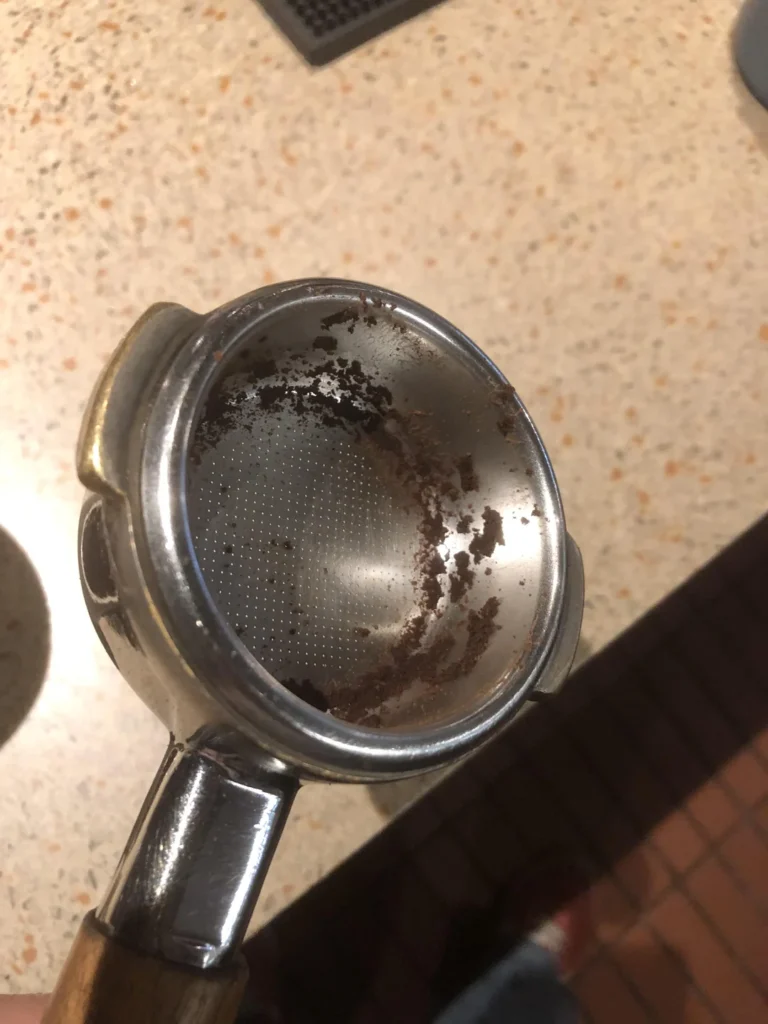
This one sounds basic. It gets skipped constantly.
Residual coffee grounds and moisture in your portafilter basket directly affect how water flows through your puck. Old grounds mixed into your fresh dose create uneven density. Moisture causes the fresh coffee to clump unevenly before you even tamp.
Before every single shot, wipe your portafilter basket with a clean, dry cloth. Not a damp cloth — dry. Remove every trace of the previous extraction. It takes three seconds and it matters more than most baristas realise.
The same principle applies to your group head. Purge it briefly before locking in the portafilter — this clears residual grounds from the shower screen and brings the group head temperature to a stable level. A cold or residue-laden group head is a silent shot-killer.
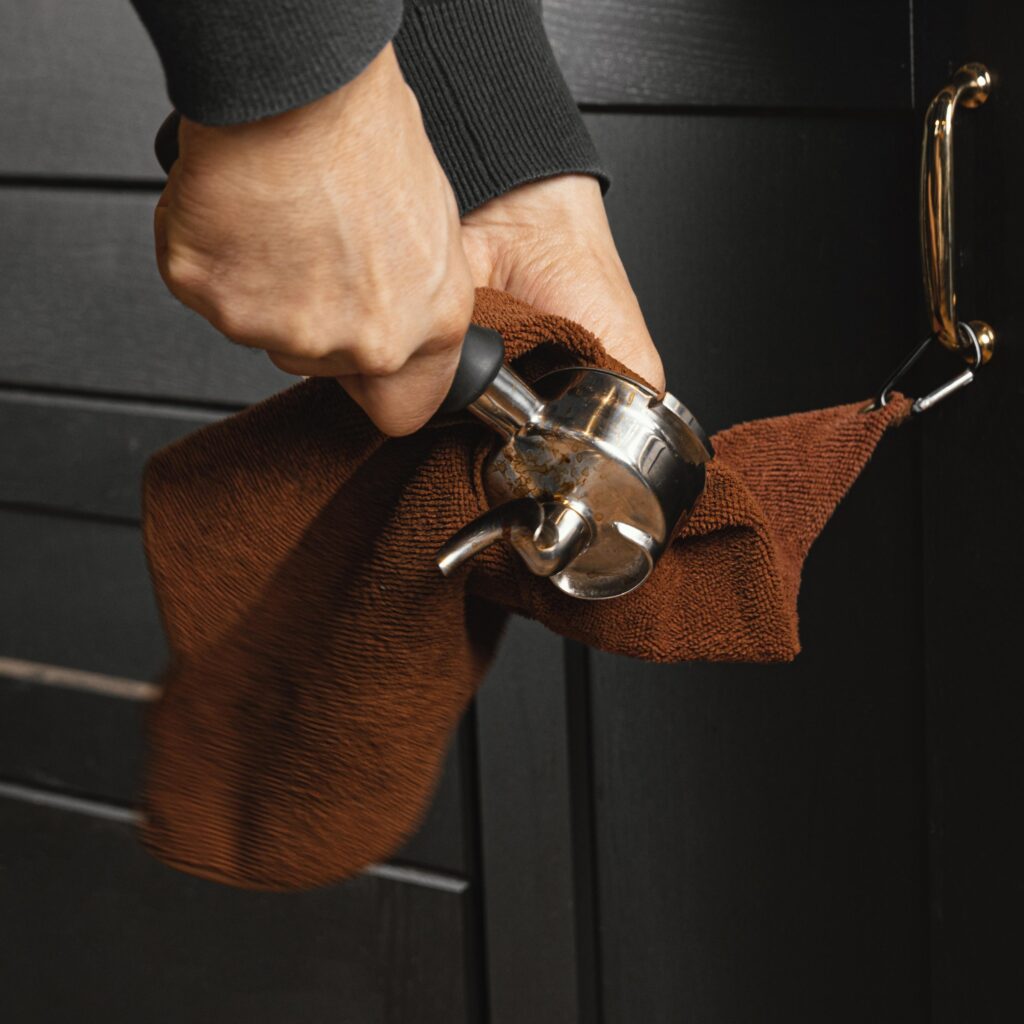
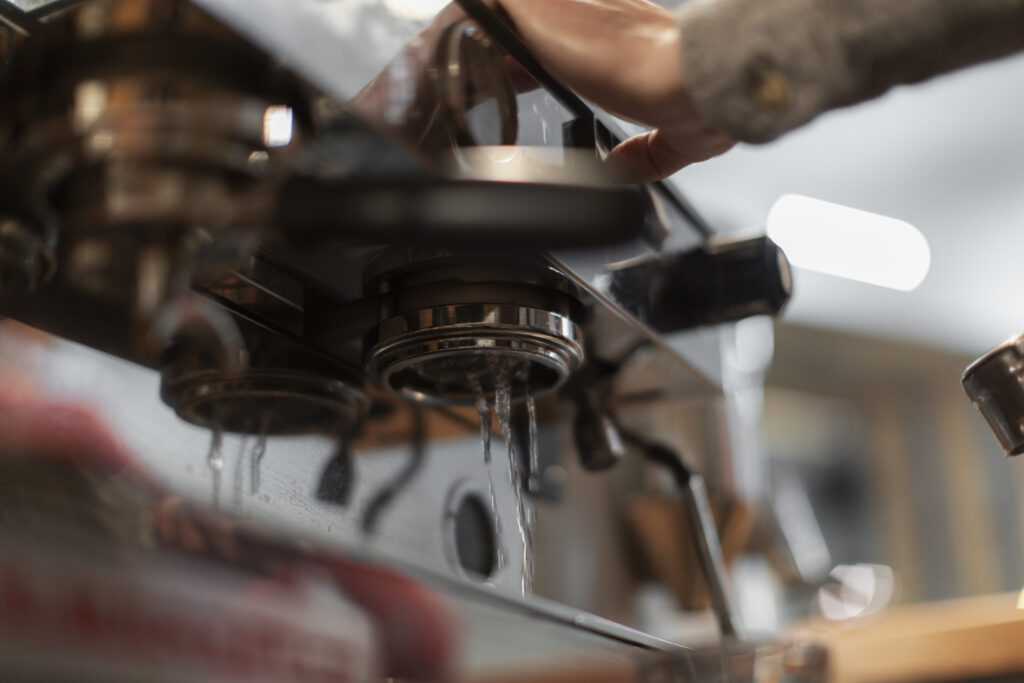
The habit to build: Clean portafilter → purge group head → dose. In that order, every time, without exception.
Tip 2 — Weigh Your Dose, Every Single Time
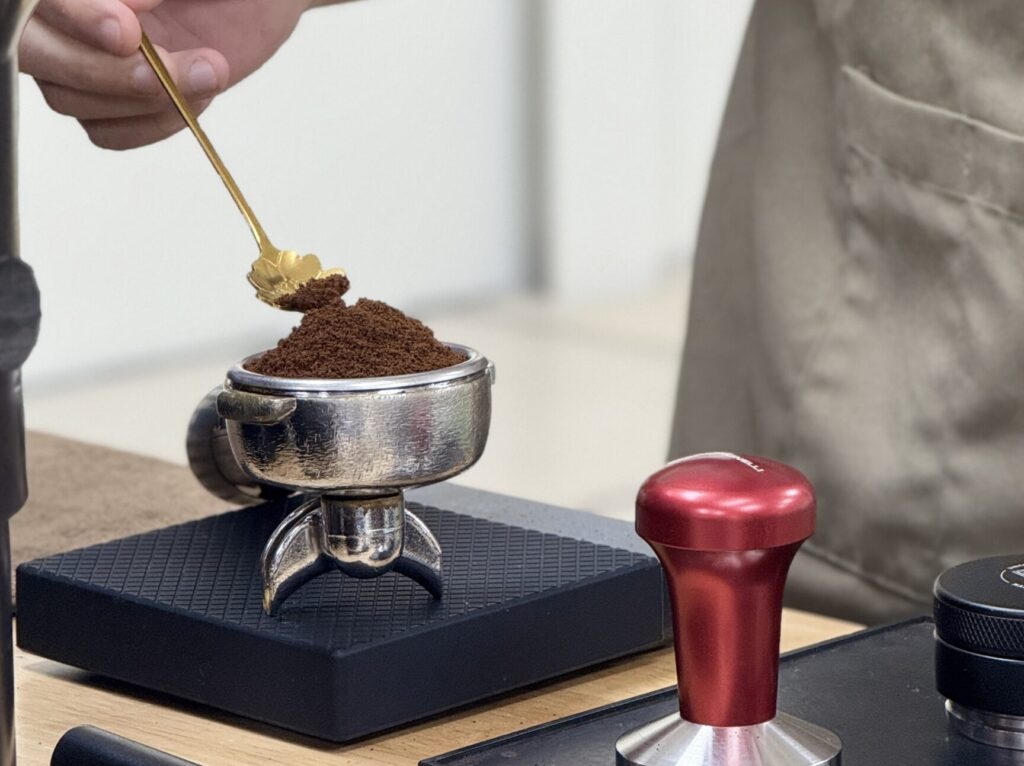
If you’re scooping coffee by eye or feel, you are accepting inconsistency as a given. A difference of just half a gram in your dose changes the resistance the water encounters, which changes your extraction time, which changes your flavour.
Invest in a good set of scales and use them. Most specialty cafés work to a recipe — for example, 18 grams of ground coffee in, 36 grams of liquid espresso out, in 28 to 32 seconds. This is called a brew ratio, and it gives you a repeatable framework to work from and adjust against.
When your shot tastes off, you now have data. Was it the dose that changed? The yield? The time? Without weighing, you’re guessing. With weighing, you’re diagnosing.
This is one of the first things we establish in SCA Barista Skills Foundation training — not because it’s complicated, but because it’s the foundation everything else is built on. You cannot improve what you don’t measure.
The habit to build: Dose into the basket → place on scales → check weight → adjust if needed → then grind or tamp. Never skip the scale.
Tip 3 — Tamp Level, Not Just Hard
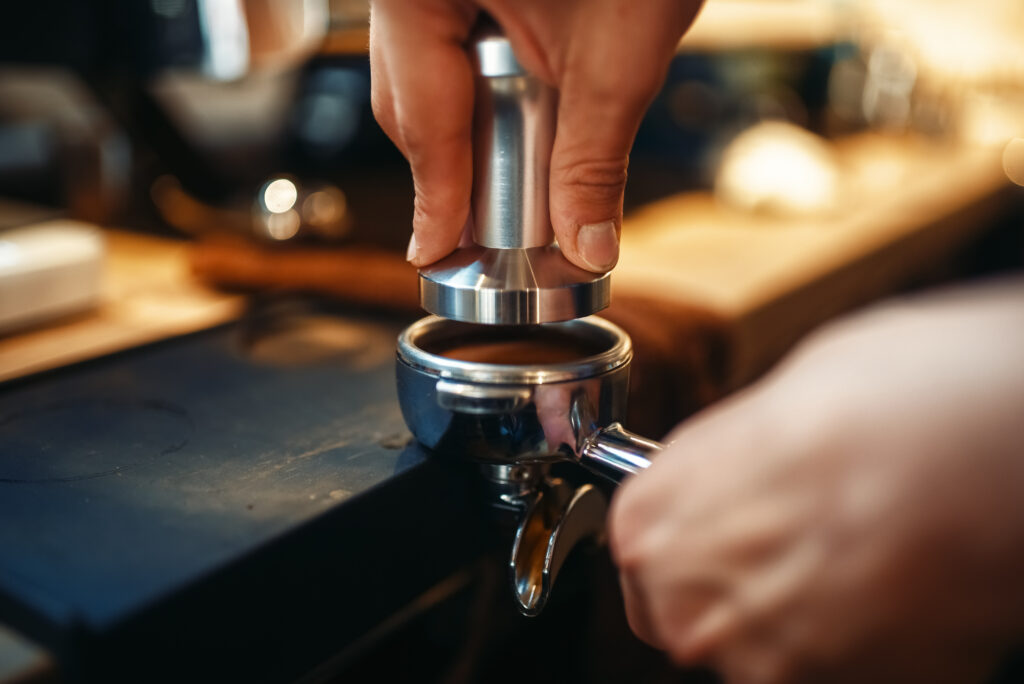
Tamping is probably the most misunderstood step in espresso preparation. Most beginners focus on how hard they tamp. The more important variable is whether they tamp level.
An uneven tamp creates an uneven puck surface. When pressurised water hits an uneven puck, it takes the path of least resistance — flowing faster through the thinner, less compacted areas. This is called channelling, and it’s one of the most common reasons for sour, weak, or inconsistent espresso.
A level tamp means the coffee surface is perfectly horizontal and uniform before water ever touches it. This gives the water no preferential path — it distributes evenly across the entire puck and extracts coffee uniformly from edge to centre.
Technique: rest your elbow against your body to stabilise your wrist, apply firm downward pressure straight through the centre of the basket, and finish with a smooth, level press. Don’t twist at the end — a twist introduces micro-surface disruption that can encourage channelling.
If you want to take this further, a good distribution tool or WDT (Weiss Distribution Technique) tool used before tamping will break up clumps and create an even bed for your tamp to compress. It makes a noticeable difference.
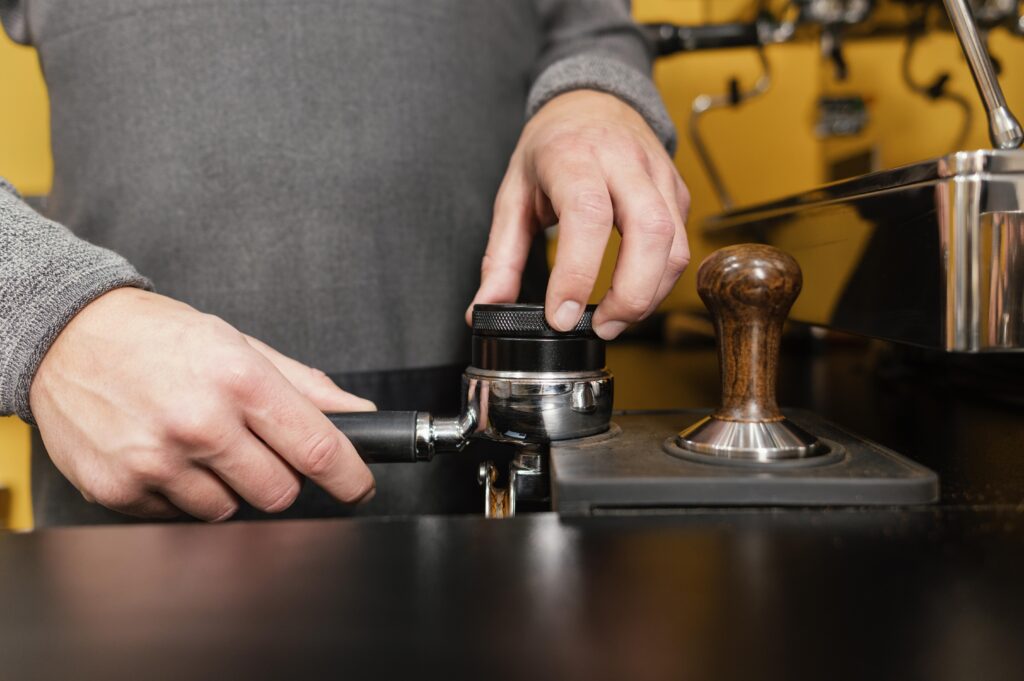
The habit to build: Distribute evenly first → tamp straight and level → check visually that the puck surface is flat before locking in.
Tip 4 — Dial In Your Grind Every Day, Not Just When Something Goes Wrong
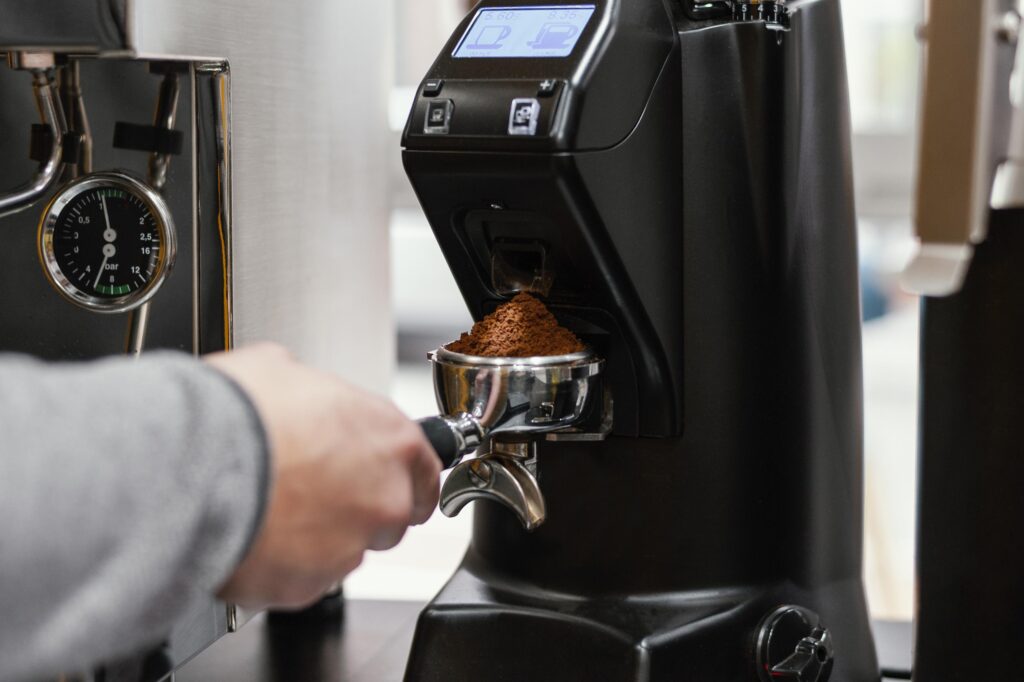
Your grinder is the single most important variable in espresso quality. The espresso machine delivers pressure — the grinder controls resistance. And resistance is what determines extraction.
Here’s what many baristas don’t account for: the ideal grind setting is not static. It changes daily based on the ambient temperature and humidity in your café, the age of your coffee beans, and even how warm your grinder burrs are after extended use during a busy morning rush.
This means dialling in is not a once-a-week task. It’s a daily practice, ideally done at the start of every shift before the first customer shot is served.
The process is straightforward. Pull a shot. Taste it and check the time. If it runs too fast and tastes sour or weak, grind finer. If it runs too slow and tastes bitter or harsh, grind coarser. Adjust in small increments — on most grinders, a single step on the adjustment dial is enough to shift extraction noticeably. Pull another shot. Taste again. Repeat until the shot is within your target time and tastes balanced.
This daily ritual is not inefficiency. It’s professionalism. It’s the difference between a café that serves great coffee at 9am on a humid Monday and one that serves great coffee only when conditions happen to align with last week’s grind setting.
The habit to build: First thing every shift — check temperature and humidity if possible, pull and taste a dial-in shot, adjust grind before opening. Treat it as non-negotiable.

Tip 5 — Taste Every Shot You Pull, Especially the Ones That Look Fine
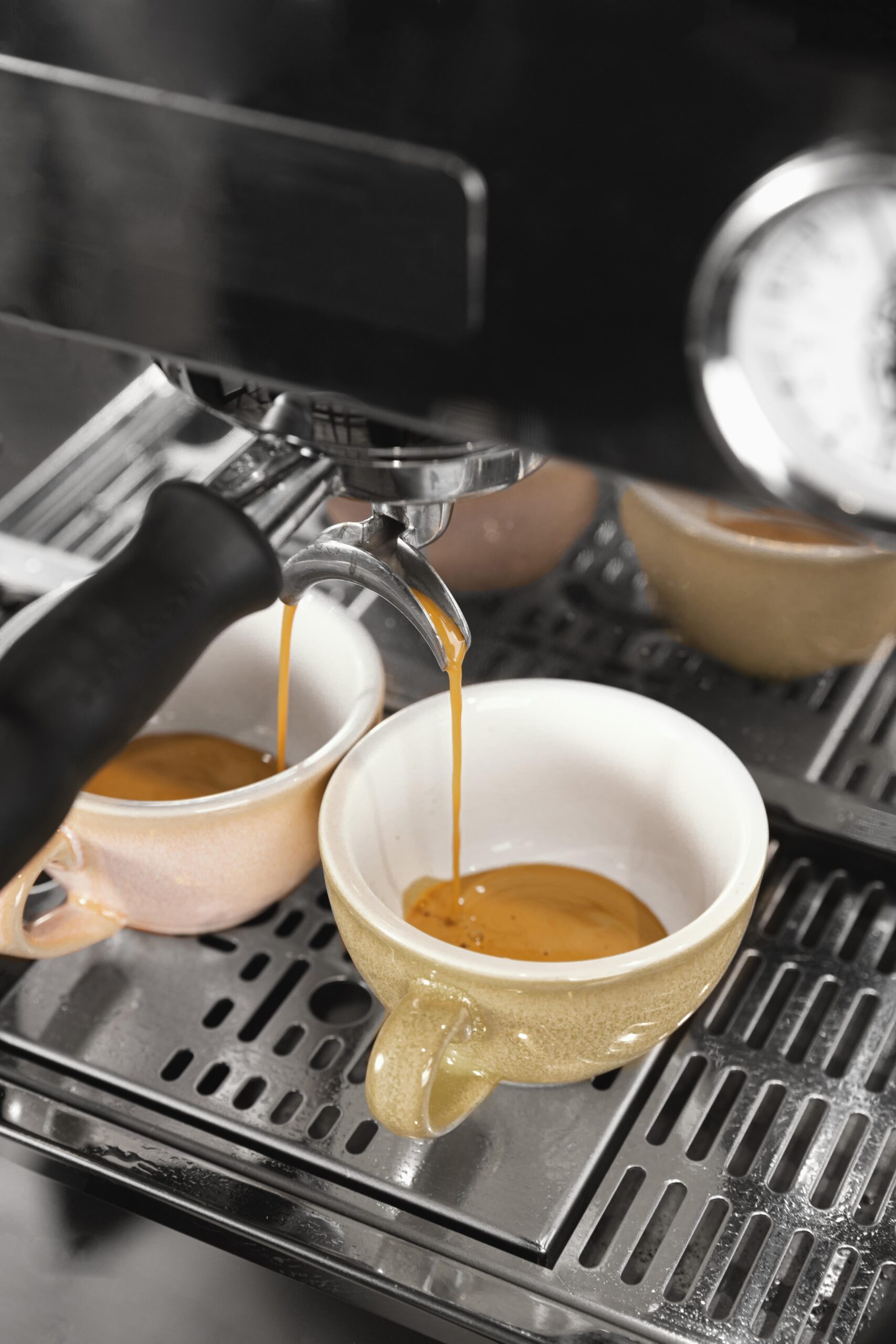
This is the tip that separates good baristas from great ones.
It is very easy to judge an espresso by how it looks — the colour of the crema, the flow pattern during extraction, the yield in the cup. Experienced baristas develop an eye for these things and they are useful signals. But they are not the full picture.
The only true measure of a shot is how it tastes. And the only way to know how it tastes is to taste it.
Make it a habit to taste your espresso regularly throughout your shift — not just when you suspect something is wrong. Taste a shot in the morning after dial-in. Taste one mid-shift when the café has been running for a few hours and the grinder has warmed up. Taste one if you notice the flow pattern has changed.
When you taste, taste with intention. Ask yourself specific questions: Is there sweetness? Is the acidity bright and pleasant or sharp and unpleasant? Is there bitterness and if so does it linger? Does the body feel full and round or thin and watery? Is the aftertaste clean?
These are the questions your SCA Sensory Skills training teaches you to answer systematically. But even without formal sensory training, developing the habit of tasting deliberately — rather than just checking — builds your palate rapidly and gives you the feedback loop you need to keep quality consistent.
The habit to build: Taste intentionally at least three times per shift — morning dial-in, mid-shift check, and any time you notice a change in flow pattern or extraction time.

Putting It All Together
These five habits are not advanced techniques reserved for competition baristas. They are the professional fundamentals that every barista working in a specialty café environment should have as second nature.
Clean portafilter. Weighed dose. Level tamp. Daily dial-in. Deliberate tasting.
Done consistently, in that order, every shift — they will transform the reliability of your espresso more than any expensive equipment upgrade ever will.
If you want to build these habits in a structured, assessed environment with SCA-certified guidance, our Barista Skills Foundation and Intermediate courses at Lighthouse Coffee Academy are exactly the right place to start. You’ll leave with not just the knowledge but the muscle memory — and a globally recognized certification to show for it.
Ready to take your espresso skills to the next level?
WhatsApp us or explore our barista courses here to find out about our next SCA intake in Penang.