


Why Coffee Grind Size in Microns Matters More Than Your Grinder Setting
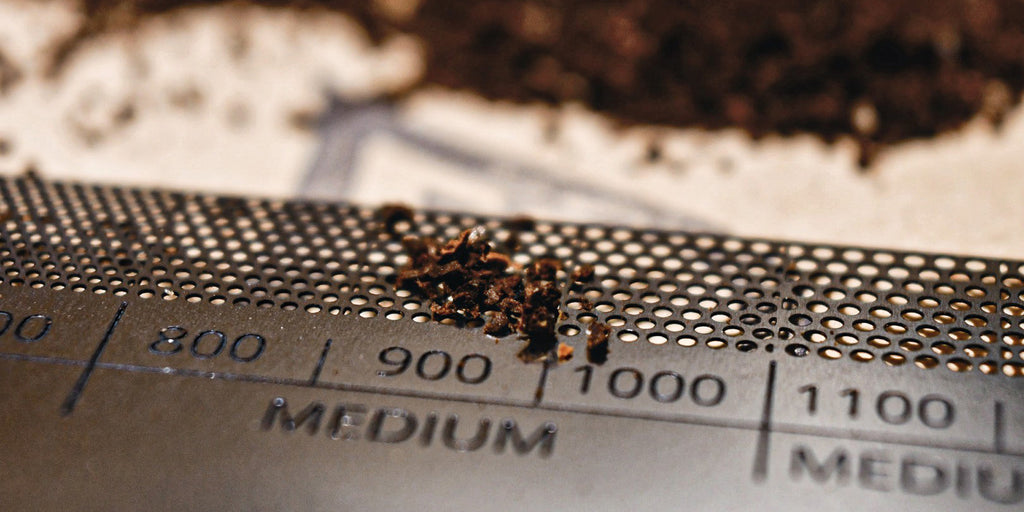
“That number on your grinder dial? It’s just a starting point. The real science happens at a level you can’t even see.”
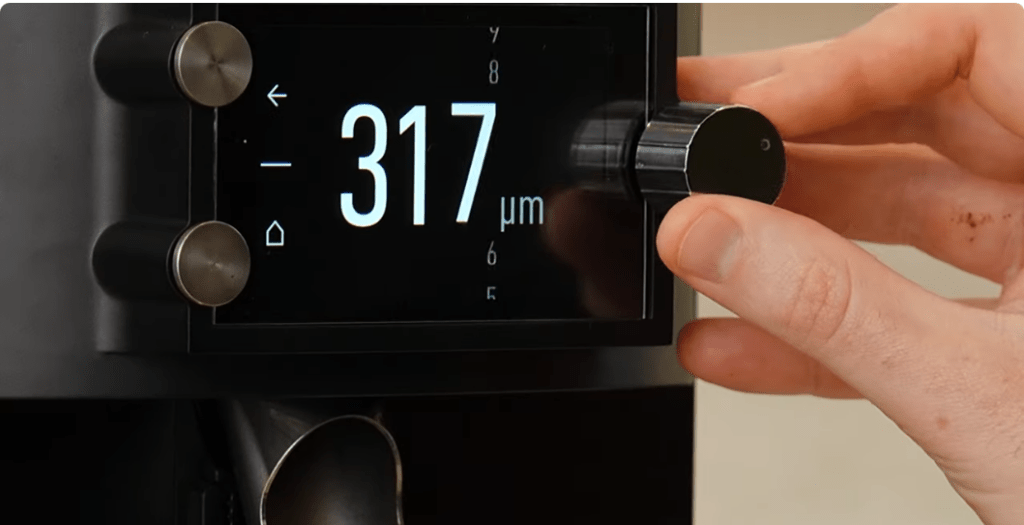
Ask any barista what grind setting they use for espresso, and they’ll give you a number. Ask them why that number works — and most will hesitate. The truth is, grinder settings are arbitrary. A “5” on one machine produces a completely different result than a “5” on another. What actually controls your coffee extraction is something far more precise: particle size, measured in microns.
Understanding microns won’t just make you a better barista. It’ll change the way you think about every cup you make — whether you’re pulling espresso behind a commercial machine, brewing pour over at home, or dialling in a batch brew for a full café service.
What Is a Micron — And Why Should You Care?
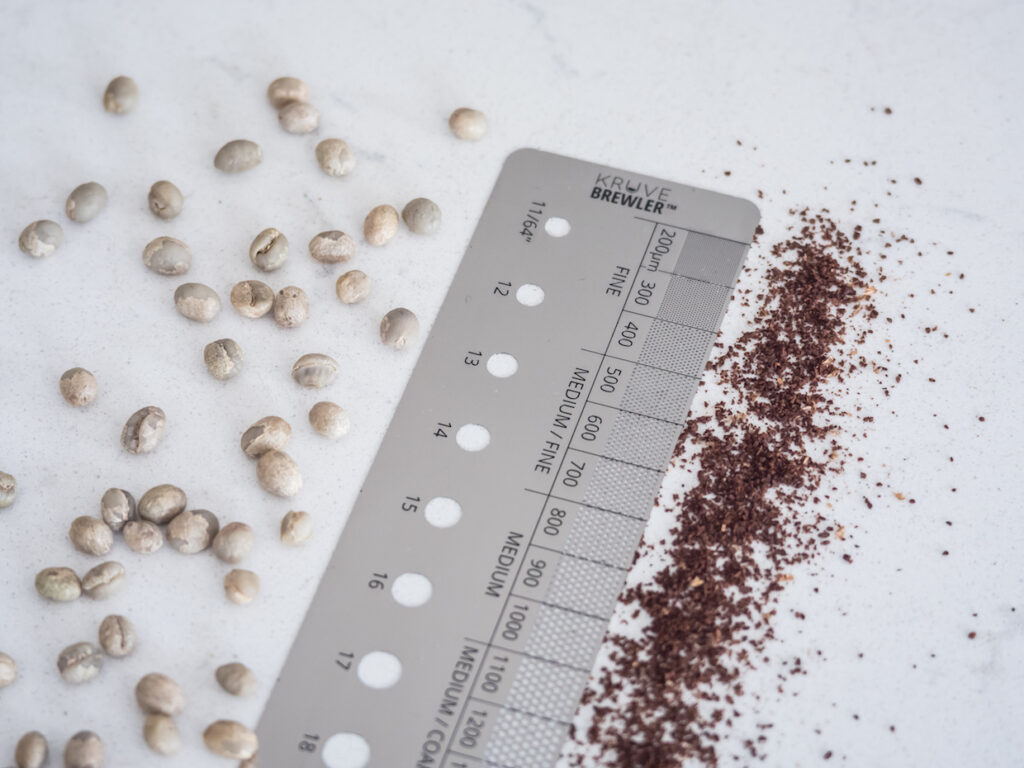
A micron (µm) is a unit of measurement equal to one-thousandth of a millimetre. It’s invisible to the naked eye, yet it’s one of the most important variables in coffee extraction.
When you grind coffee, you’re breaking whole beans into thousands of individual particles. The size of those particles — measured in microns — determines how quickly water can extract soluble compounds from the coffee. Smaller particles have more surface area exposed to water, so they extract faster. Larger particles have less surface area, so they extract slower.
This is why grind size is the primary dial for controlling extraction. Change your grind size, and you change everything — brew time, flow rate, flavor balance, and body.
Grind Size by Brew Method: The Micron Breakdown
Different brewing methods require different particle sizes because they use different contact times and water pressure. Here’s a general reference guide:
| BREW METHOD | PARTICLE SIZE RANGE | WHY THIS SIZE? |
|---|---|---|
| Espresso | 200 – 400 µm | High pressure, short contact time needs fine resistance |
| AeroPress | 400 – 600 µm | Versatile — adjust to brew time preference |
| Pour Over / V60 | 500 – 900 µm | Medium grind allows controlled drainage through filter |
| Batch Brew / Filter | 700 – 1000 µm | Longer contact time needs coarser particle for balance |
| French Press | 900 – 1200 µm | Full immersion, coarse grind prevents over-extraction |
| Cold Brew | 1200 – 1500 µm | Very long steep time requires the coarsest grind |
The same coffee beans, ground to different micron sizes, will taste completely different in the cup. This is why the phrase “same coffee, different grind” is one of the most important concepts in coffee training.
It’s Not Just Size — It’s Consistency
Here’s where most coffee discussions stop short. Knowing the right micron range for your brew method is only half the equation. The other half is Particle Size Distribution (PSD) — how consistent your particles are after grinding.
Imagine grinding 10 grams of coffee and ending up with particles ranging from 50 µm to 1,200 µm in the same batch. The tiny particles would extract in seconds. The large ones would barely extract at all. Your resulting cup would taste muddled — simultaneously bitter and sour, lacking clarity and sweetness.
A grinder that produces tight, uniform PSD — where most particles cluster around a target size — gives you predictable, even extraction. This is why professional-grade grinders with larger, precisely engineered burrs are worth the investment. They don’t just grind faster. They grind more consistently.
Two grinders at the “same setting” can produce entirely different cups because their actual particle size distribution differs. The number means nothing without consistency behind it.
Fines and Boulders: The Two Enemies of a Good Grind
Every grinder — no matter how expensive — produces a mix of particle sizes. The two extremes have names in the coffee world, and understanding them helps you troubleshoot your cup.
PROBLEM #1
Fines (~0–100 µm)
Ultra-fine particles that extract almost instantly. They’re responsible for bitterness, muddy mouthfeel, and clogging in espresso. In filter coffee, they pass through some paper filters and create a murky, astringent cup. All grinders produce fines — great grinders produce fewer of them.
PROBLEM #2
Boulders (Oversized Particles)
Chunks that are far too large to extract properly within the brew time. They contribute sourness, flatness, and a thin body to the cup. They’re the reason a coffee can taste simultaneously under-extracted even when your fines are over-extracting. Both problems happening at once = a confusing, unbalanced cup.
This is why burr quality and burr size matter. Larger, flatter burrs with precision-machined edges produce cleaner cuts — more particles landing near the target size, fewer fines and boulders at the extremes. It’s not about grinding speed. It’s about grinding precision.
How to Use This Knowledge When Dialling In
Understanding microns shifts your approach to dialling in from guesswork to diagnosis. Instead of randomly adjusting your grinder setting and hoping for the best, you can ask the right questions:
If your espresso is running too fast and tastes sour or thin:
Your particles are likely too large (too coarse). Water flows through with too little resistance, contact time is too short, and not enough soluble compounds are extracted. Go finer.
If your espresso is running too slow and tastes bitter or harsh:
Your particles are too small (too fine). Water is struggling to push through, contact time is too long, and you’re over-extracting. Go coarser.
If your filter coffee tastes muddy or flat despite correct brew ratio:
Check for fines — they may be over-extracting while your main particles are balanced. A grinder upgrade or grind setting adjustment may help. Also consider your pouring technique, which affects how evenly water contacts the bed.
The key principle: dial in by taste, guided by understanding. Your grinder setting is just a number. What you’re actually chasing is the right particle size for your brew method, at the most consistent distribution your equipment can produce.
Why Professional Barista Training Teaches This From Day One
At Lighthouse Coffee Roastery & Academy, we teach the science of grinding as a foundation — not an advanced topic. Whether you’re enrolled in our SCA Barista Skills Foundation or attending one of our corporate coffee workshops, understanding particle size is part of how we build baristas who can troubleshoot, adapt, and grow.
A barista who only knows their “usual setting” is dependent on that one machine, that one bag of beans, that one café. A barista who understands microns, extraction dynamics, and PSD can walk into any setup, assess the variables, and dial in confidently.
That’s the difference between operating a grinder and understanding one.
Check out below link, you will love it
Grind Size Analyzer https://education.unspecialty.com/tools
Grind Size Chart https://honestcoffeeguide.com/coffee-grind-size-chart/
Ready to Grind Smarter?
Learn the science behind every extraction at Lighthouse Coffee Roastery & Academy.
From SCA-certified barista courses to corporate coffee training — we teach coffee the right way.
SCA CERTIFIED | HRD CORP CLAIMABLE | HALAL CERTIFIED | MESTI CERTIFIED
WhatsApp us or explore our barista courses here to find out about our next SCA intake in Penang.