


If you’ve ever taken a sip of coffee and thought — wait, is that jasmine? — there’s a good chance it came from Yirgacheffe.
This small highland district in southern Ethiopia produces some of the most distinctive coffee on earth. Floral, bright, and bursting with citrus and berry notes, it tastes unlike anything else in the cup. And there’s a fascinating reason for that.
Coffee Was Born Here
Every cup of Arabica coffee in the world traces its roots to Ethiopia. Coffea arabica didn’t originate in Colombia or Brazil — it evolved wild in the forests of the Ethiopian highlands, and Yirgacheffe sits right in the heart of that origin.
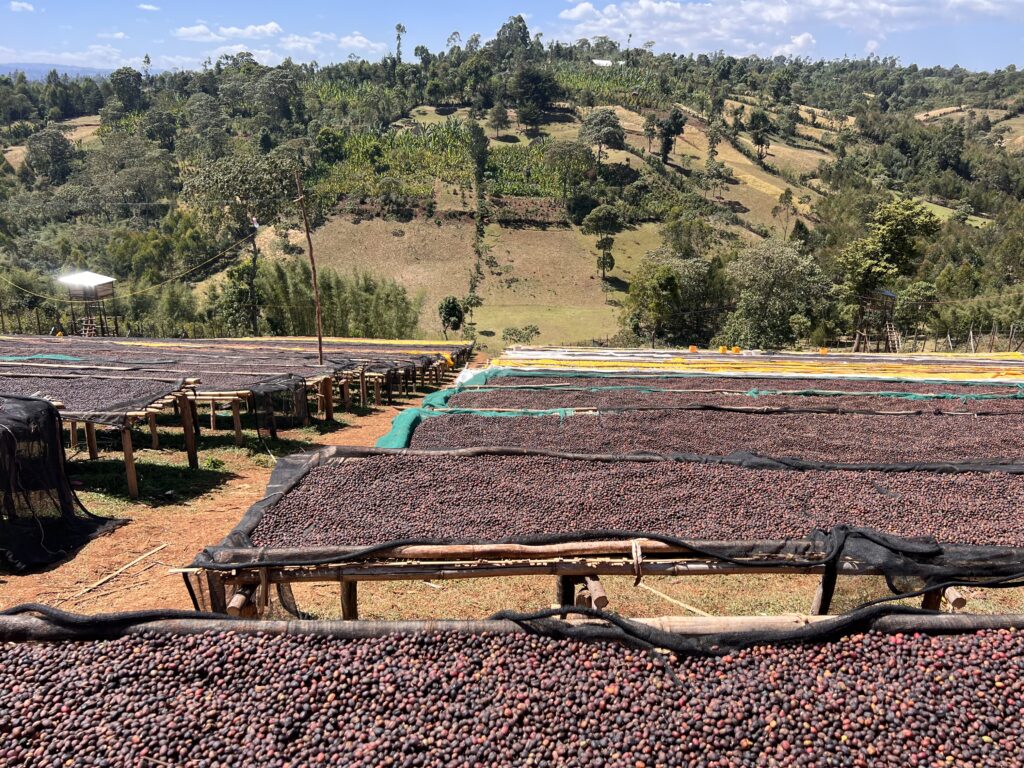
Grown at elevations between 1,700 and 2,200 metres above sea level, Yirgacheffe’s coffee cherries develop slowly in cool mountain air. The volcanic soil is mineral-rich and slightly acidic — exactly what coffee loves. Shade trees, banana plants, and dense forest canopy surround the coffee plants, creating a natural microclimate that adds layers of complexity found nowhere else.
This isn’t just good growing country. It’s the original growing country.
So Why Does It Taste Floral?
This surprises most people. Floral? In coffee?
Here’s the science: coffee beans contain hundreds of volatile aromatic compounds — including linalool and geraniol, the same molecules found in jasmine and rose oil. In most commercial coffee, these delicate notes get burned off during dark roasting or buried under lower-quality beans. In Yirgacheffe, they survive and shine.
The slow cherry development at high altitude, combined with heirloom genetics and careful processing, allows these compounds to express themselves fully. The result is a cup that can genuinely smell and taste like:
- Jasmine or honeysuckle — light, ethereal, in the aroma and first sip
- Bergamot or lemon zest — the same citrus in Earl Grey tea
- Blueberry or peach — especially in naturally processed lots
- Delicate black tea — a transparency and lightness unlike heavier Latin American coffees
The acidity is bright and clean — the kind that makes your palate feel alive, not sharp or unpleasant.
Washed vs. Natural: Two Very Different Cups
How the coffee is processed after harvest dramatically changes what ends up in your cup.
Washed Yirgacheffe removes the fruit immediately after picking, ferments the beans briefly in water, then dries them clean. The result is a clear, elegant cup — jasmine, bergamot, lemon — where the terroir speaks without distraction. This is the classic Yirgacheffe profile.
Natural Yirgacheffe dries the whole cherry, skin and all, for weeks on raised beds. The bean soaks up sugars from the fermenting fruit. The result is bolder and fruitier — intense blueberry, strawberry jam, and a heavier body. More complex, but also more variable in quality.
Neither is “better.” They’re just different conversations with the same origin.
The Genetics No Other Country Has
Ethiopia is the only country where Arabica coffee still grows in truly wild or semi-wild states. The genetic diversity is unlike anywhere else on earth — potentially thousands of distinct heirloom varieties that have never been formally catalogued.
Most of the world’s coffee has been bred for yield and disease resistance, often sacrificing flavour. Yirgacheffe’s coffee grows from the same ancestral lines it always has. This is a big part of why the flavours are so extraordinary — and why no other origin can quite replicate them.
The now-famous Gesha variety? It originally came from Ethiopia. The best is likely still there, undiscovered.

How to Brew Yirgacheffe Right
To get the most out of it, a few simple rules:
Roast level matters. Always buy light to medium roast. Dark roasting destroys the very floral and citrus notes that make Yirgacheffe special. Look for “City” or “City+” (light to light-medium roast) on the bag — never French roast.
Best brewing methods:
- Pour over (V60, Chemex) — the gold standard. Clean, bright, fully aromatic.
- AeroPress — great for a tea-like, concentrated cup.
- Cold brew — surprisingly beautiful. The floral notes translate perfectly to cold, naturally sweet, zero bitterness.
Avoid dark roasting, French press (muddy the cup), and cheap drip machines that can’t hit the right temperature.
Why Your Purchase Actually Matters
Coffee accounts for roughly 30–35% of Ethiopia’s export earnings. More than 15 million Ethiopians depend on it. When you buy ethically sourced Yirgacheffe from a reputable specialty roaster — one paying well above commodity price — that premium flows directly back to smallholder farmers.
Higher prices reward careful harvesting and processing. Better processing means better coffee. It’s a rare win-win that starts with being intentional about what you buy.
One Last Thing: The Coffee Ceremony
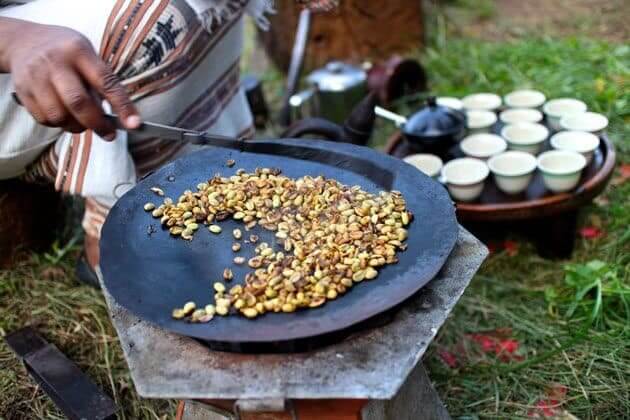
The traditional bunna mafrat (coffee ceremony) involves roasting green beans over coals, grinding them by hand, and brewing in a clay pot called a jebena. Three rounds are served — each one slightly weaker, the last considered a blessing. The ceremony can last two to three hours.
To be invited is to be welcomed into someone’s home and trust. It’s a reminder that the beverage we gulp down on the way to work carries, in its homeland, a depth of meaning worth pausing to appreciate.
Ethiopia Yirgacheffe is floral because of ancient genetics, extreme elevation, volcanic soil, and careful craft. It’s irreplaceable because nowhere else on earth has the same combination of all four. If you’ve never tried it, you haven’t yet experienced what coffee can actually taste like — and that’s worth fixing.
Have you tried Yirgacheffe? Washed or natural — which is your favourite? Tell us in the comments below.