


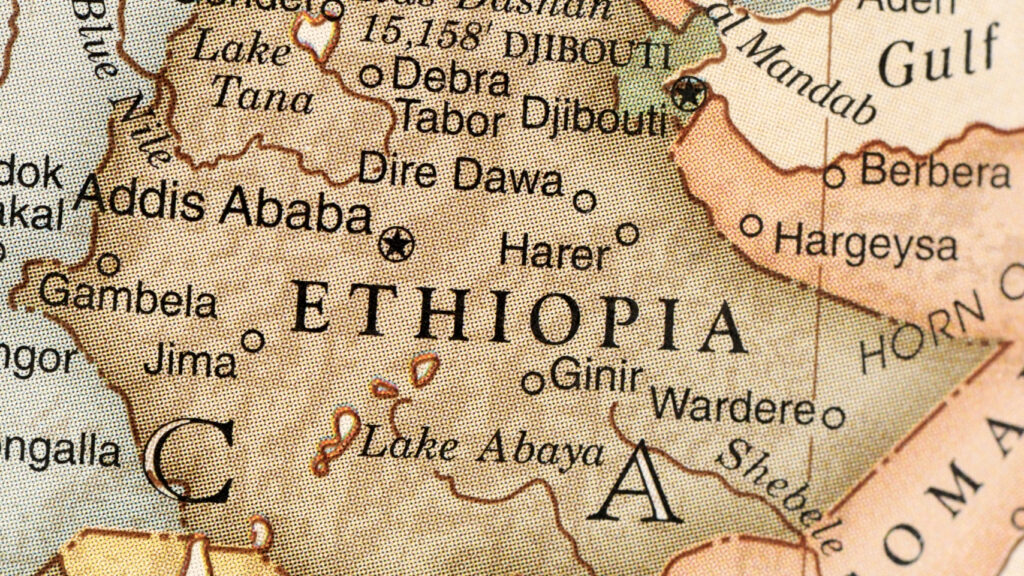
Have you ever wondered why an Ethiopian coffee tastes like blueberries while a Colombian cup reminds you of caramel and nuts? Or why Yemeni coffee carries a winey, almost chocolatey depth unlike anything else in the world?
The answer lies in origin — and understanding it is one of the most rewarding journeys any coffee lover can take.
At Lighthouse Coffee Roastery & Academy, we source and roast coffees from across the globe specifically because we believe origin tells a story. Every bean carries the fingerprint of the land it grew on, the hands that harvested it, and the traditions that shaped it. In this guide, we’ll break down exactly how geography, climate, altitude, soil, and processing work together to create the flavour in your cup.
What Is Coffee Terroir?
If you’ve heard the word terroir before, it’s probably in the context of wine. But it applies equally to coffee.
Terroir refers to the complete natural environment in which a crop grows — the soil composition, rainfall patterns, temperature swings, altitude, and surrounding flora. Two coffees grown from the same variety of seed but in different countries, or even different farms within the same region, can taste entirely different because of terroir.
Think of it this way: the coffee cherry absorbs the character of its environment as it grows. A farm at 1,800 metres above sea level, surrounded by tropical forest in Ethiopia, produces a very different cherry than one grown at 1,000 metres on sun-drenched volcanic slopes in Brazil. That difference ends up in your cup.
The Major Coffee-Growing Regions and What They Taste Like
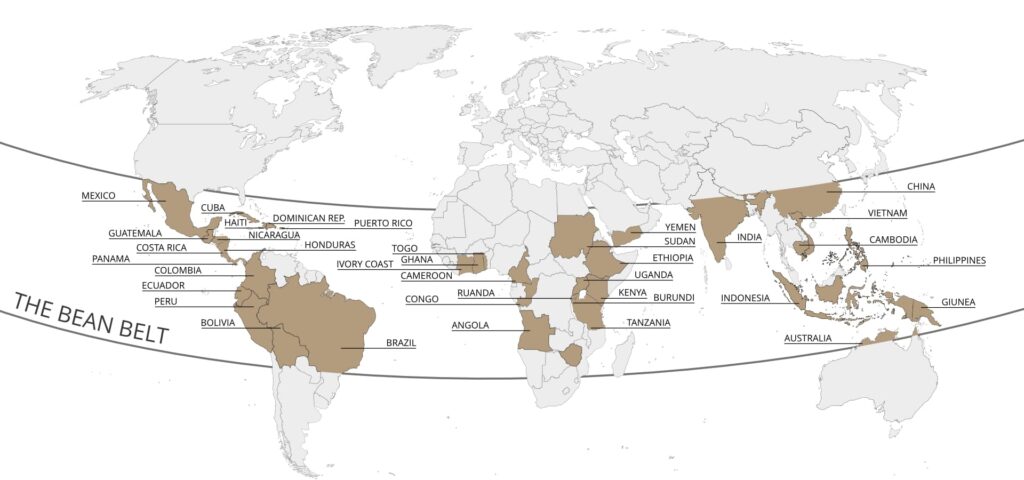
Coffee grows in a band around the equator known as the Coffee Belt — roughly between the Tropics of Cancer and Capricorn. Within this belt, conditions vary enormously, and those variations create distinct regional flavour profiles.
Africa — Bright, Fruity, Floral
Africa is considered the birthplace of coffee, and it shows in the cup. African coffees are celebrated for their vibrant acidity and complex fruity or floral notes.
Ethiopia is the most famous origin of all. Yirgacheffe produces coffees bursting with jasmine, bergamot, and stone fruit. Sidamo tends toward a riper berry quality. Guji offers wine-like complexity with tropical fruit notes. Ethiopian coffees are often processed naturally (dried whole), which amplifies the fruit character significantly.
Kenya produces some of the world’s most sought-after coffees — juicy, full-bodied, with a signature blackcurrant or tomato-like acidity that is unmistakably Kenyan. The SL28 and SL34 varieties, combined with the country’s high altitude and red volcanic soil, are responsible for this distinct profile.
Burundi and Rwanda deliver clean, honey-sweet cups with citrus brightness and a creamy body — excellent origins that are growing in recognition on the specialty scene.
West Africa — Spiced, Winey, Complex
Yemen is one of coffee’s oldest and most mysterious origins. Yemeni beans, grown in ancient stone terraces and processed using age-old methods, produce a winey, spiced, deeply complex cup unlike anything from the modern specialty world. It’s rare, precious, and worth seeking out.
Central & South America — Balanced, Nutty, Chocolatey
Latin American coffees are often described as approachable, balanced, and crowd-pleasing — which is exactly why they form the backbone of so many espresso blends worldwide.
Colombia is legendary for a reason. High altitude, year-round harvesting cycles, and a unique double-peak rainy season give Colombian beans a clean, mild acidity with notes of caramel, red apple, hazelnut, and milk chocolate. Colombia’s diverse microclimates — from Huila to Nariño to Antioquia — each add their own nuance.
Guatemala delivers a more robust cup with dark chocolate, brown sugar, and a slight smokiness, especially from the Antigua and Huehuetenango regions.
Costa Rica is known for its strict quality regulations (only arabica is legally permitted) and produces elegant, clean cups with bright citric acidity and a sweet, tea-like finish.
Brazil, the world’s largest coffee producer, grows most of its coffee at lower altitudes, which results in lower acidity and a heavier, sweeter body — think dark chocolate, peanut, and caramel. Brazilian naturals are a cornerstone of Italian-style espresso blends.
Asia-Pacific — Earthy, Full-Bodied, Bold
Asian coffees offer something entirely different: low acidity, heavy body, and earthy or savoury complexity that some find an acquired taste and others find endlessly fascinating.
Indonesia is home to some of the world’s most distinctive coffees. Sumatra, processed using the unique wet-hulling method (Giling Basah), produces famously dark, earthy, tobacco-forward cups with a syrupy body. Java and Sulawesi offer similar weight, though cleaner in their flavour.
India is less commonly discussed but produces some exceptional coffees, particularly from the Coorg and Araku Valley regions — with notes of dark spice, cocoa, and a distinct low-acidity sweetness.
Papua New Guinea is an underrated gem: clean, bright, with tropical fruit and a silky body that surprises most first-time drinkers.
Why Does Altitude Matter So Much?
Altitude is one of the single most important factors in coffee flavour, and it’s worth understanding why.
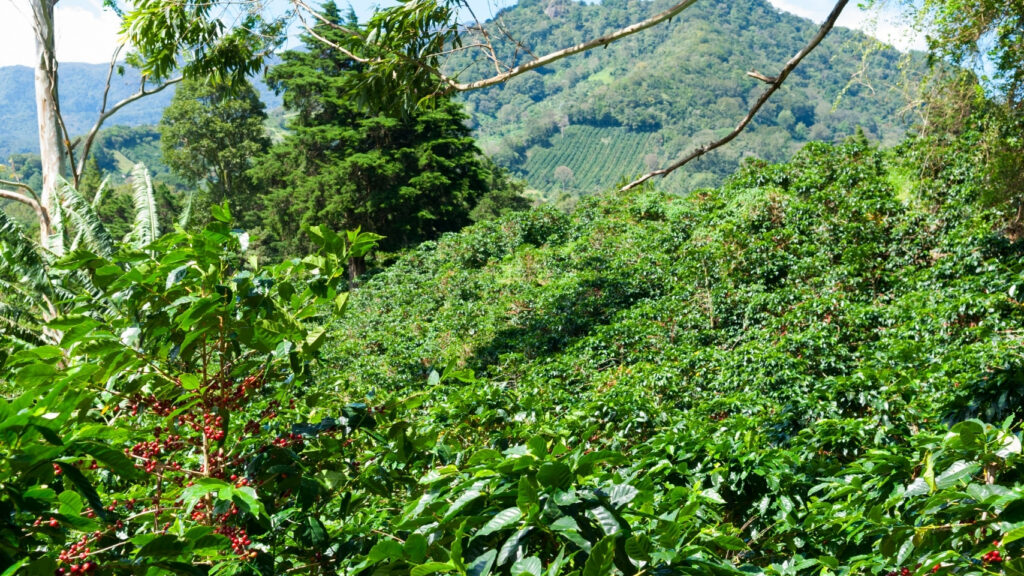
At higher altitudes, temperatures are cooler and the coffee cherry takes longer to ripen. This slow maturation allows the sugars and acids within the cherry to develop more complexity. The result is a denser, harder bean with more intricate flavour — higher perceived acidity, cleaner taste, and more pronounced sweetness.
As a general rule:
- Below 1,000m — heavier body, lower acidity, simpler sweetness (most Brazilian and Vietnamese robusta)
- 1,000–1,500m — balanced body and acidity, classic caramel and chocolate notes
- 1,500m and above — bright acidity, floral or fruity complexity, high sweetness, lighter body
This is why specialty coffee bags often display the altitude on the label — it’s a reliable signal of what to expect in the cup.
How Processing Method Amplifies Origin Character
Origin lays the foundation, but processing is what determines how much of that character reaches your cup. The same cherry, processed differently, can taste dramatically different.
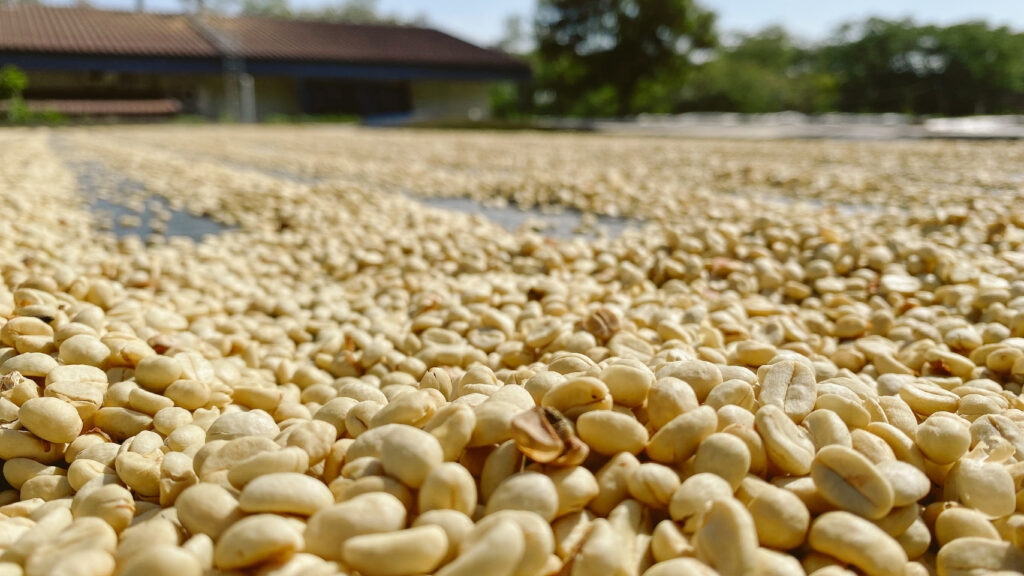
Natural (Dry) Processing — The whole cherry is dried in the sun before the fruit is removed. This allows the sugars from the fruit to ferment into the bean, producing intense fruit flavours, wine-like complexity, and heavy sweetness. Ethiopian naturals are the most celebrated example.
Washed (Wet) Processing — The fruit is removed before drying, producing a cleaner, brighter cup where the terroir of the bean itself shines through without the influence of fermentation. Kenyan and Colombian washed coffees are benchmarks of this style.
Honey Processing — A hybrid approach where some fruit mucilage is left on the bean during drying, resulting in a cup that sits between natural and washed — sweetness and body from the fruit, clarity from the partial removal.
What This Means for How You Brew
Different origins respond differently to brewing methods, and matching the two thoughtfully is part of the craft.
Ethiopian Yirgacheffe, with its delicate floral and citrus notes, is exceptionally well-suited to pour-over brewing — methods like the Hario V60 or Chemex allow the complexity to shine without adding body. Brewing it through an espresso machine at high extraction can sometimes flatten its nuance.
Indonesian Sumatra, with its heavy body and low acidity, pulls beautifully as espresso or through a French press, where full immersion and no paper filter lets the oils and body express themselves fully.
Colombian or Guatemalan coffees are incredibly versatile — they work as espresso, filter, or cold brew and rarely disappoint in any format.
Reading the Origin on a Coffee Bag
Next time you pick up a bag of specialty coffee, look beyond the country name. The most informative bags will tell you:
- Region or farm (e.g., Yirgacheffe, Huila, Sumatra Mandheling)
- Altitude (e.g., 1,800–2,000 masl)
- Variety (e.g., Heirloom, Caturra, Bourbon, Gesha)
- Processing method (e.g., Natural, Washed, Honey)
- Tasting notes (e.g., blueberry, caramel, dark chocolate)
Each of these details tells you something about what you’re about to taste — and the more you pay attention to them, the faster you develop your palate.
Conclusion
Coffee origin is not just a marketing detail on the bag — it is the soul of the coffee. The soil, the altitude, the climate, the variety, and the hands that harvest and process the cherry all work in concert to create something that is, in the truest sense, a taste of place.
At Lighthouse Coffee Roastery & Academy, we roast every origin with this in mind — developing each bean’s profile to let its origin character speak clearly, rather than obscuring it behind a heavy roast. Whether you’re drawn to the bright, fruity complexity of an Ethiopian natural or the bold, earthy depth of a Sumatran wet-hulled bean, there is a world of flavour waiting to be explored.
The best place to start? Your next cup.