


What Does ‘First Crack’ Actually Mean for Flavor?
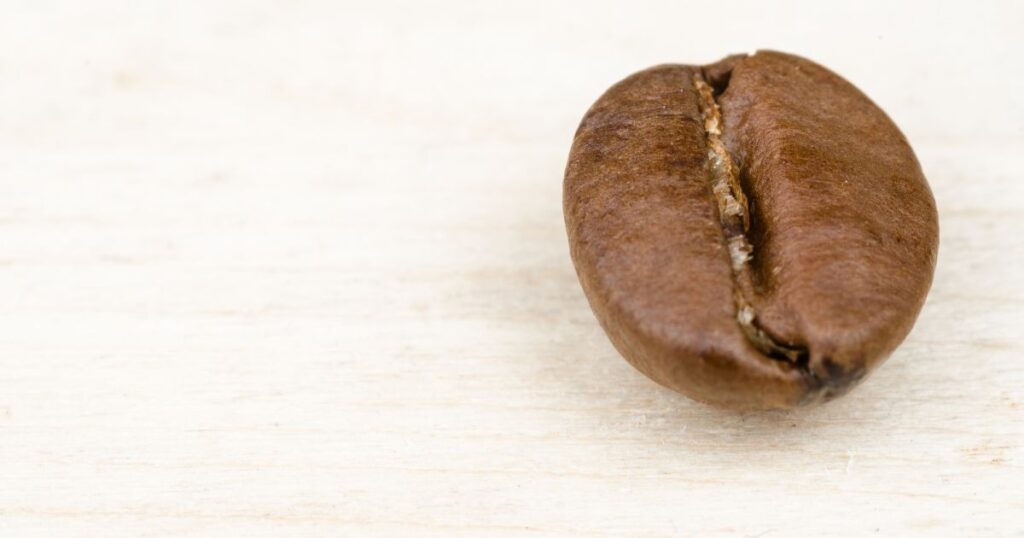
You hear it in every roast debrief. “We dropped just after first crack.” “We went two minutes past.” But if you asked ten baristas what first crack actually does to the bean’s chemistry — and why that window matters so much — most would give you a vague answer about caramelization and leave it there.
That’s the gap. Knowing when first crack happens is table stakes. Understanding what it means for the cup is what separates someone who follows a roast profile from someone who builds one.
What Is First Crack, Physically Speaking
First crack is not a metaphor. It is a real, audible event caused by pressure.
As a coffee bean heats up, moisture trapped inside starts to vaporize. At the same time, CO₂ is building up from early Maillard reactions. The bean’s cell walls can only hold so much pressure before they give — and when they do, you hear a sharp popping sound, similar to popcorn. That’s first crack.
The temperature range where this typically happens sits between 196°C and 205°C (385°F to 401°F), though this varies depending on the roaster, the drum load, the bean density, and how fast you’re driving heat. Dense beans from high altitudes — Kenyan or Ethiopian naturals, for example — often crack a little later and harder. Softer beans from lower elevations may crack more quietly and spread out over a longer window.
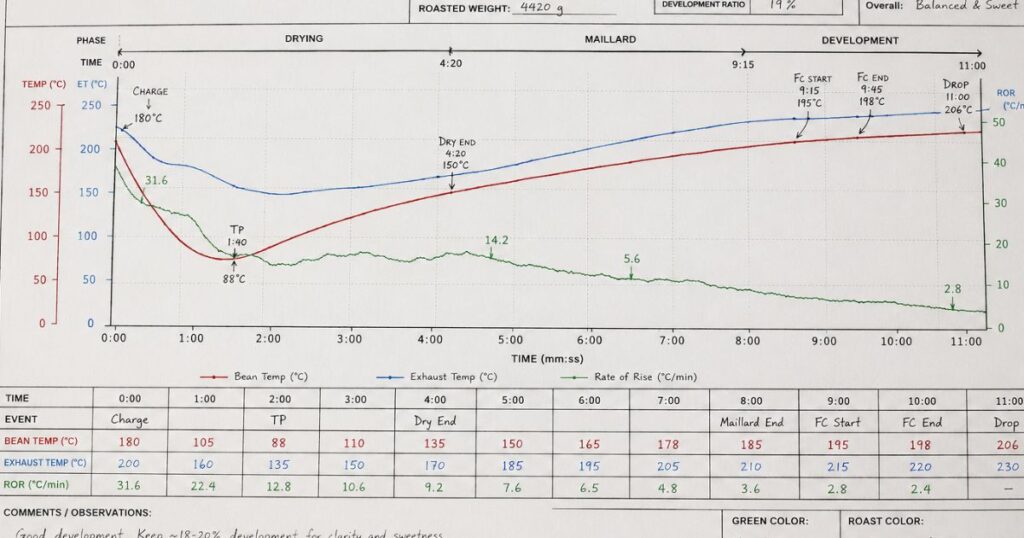
After first crack begins, you’re in a development phase. The bean is still losing moisture. The cellular structure has cracked open, which changes how heat moves through the remaining mass. This is where a roaster’s decisions have the most direct impact on what ends up in the cup.
The Chemistry Behind the Sound
The crack itself is a physical event, but what matters for flavor is everything happening in the chemistry around it.
Before first crack, you’re mostly in Maillard reaction territory. Amino acids and reducing sugars are combining under heat to create hundreds of flavor and aroma compounds. This is where a lot of a coffee’s floral, fruity, and cereal-like notes are built. Green, grassy, and bready characteristics are typical of beans that haven’t pushed far enough into this phase.
During and after first crack, you shift into more significant caramelization and the beginning of pyrolysis. Sugars are breaking down further. Acidity starts softening as chlorogenic acids degrade. Body builds. The brightness of a light roast begins giving way to roundness and depth if you push further.
This is also when volatile aromatics become more fragile. The same compounds responsible for the best floral and fruit notes in a washed Ethiopian or a natural Geisha are heat-sensitive. Push too hard, too fast after first crack, and those volatiles burn off before they make it into your grinder.
Why Development Time Matters More Than Temperature Alone
Temperature tells you where you are. Development time tells you what you’re doing with it.
Development time ratio (DTR) is the percentage of total roast time that falls between first crack and drop. Most specialty roasters work somewhere between 20% and 30% DTR, though this is not a universal rule — it’s a starting point for dialing in.
A short development time, say under 15%, tends to produce underdeveloped cups. You’ll often taste it as a bready, doughy, or astringent quality. Sometimes baristas describe it as a “raw” flavor that doesn’t go away no matter how you adjust the brew ratio. The issue isn’t the extraction — it’s that the beans weren’t given enough time post-crack to develop properly.
An excessively long development time, on the other hand, burns off the delicate aromatics you worked so hard to preserve. The cup goes flat. Fruity notes collapse into generic sweetness. A bright Ethiopian can taste like a mediocre medium roast.
The practical takeaway for baristas: when a coffee tastes astringent and under-sweet at correct extraction parameters, the roast development is the more likely culprit than your grind or water temperature. Understanding that changes how you troubleshoot.
Drop Point: What Happens When You Stop the Roast
Where a roaster decides to drop — to end the roast and begin cooling — largely defines the flavor profile the barista is working with.
Here’s a rough breakdown of what different drop points relative to first crack tend to produce:
At the very start of first crack (or just as it begins) The bean is still quite dense with moisture. Flavors at this point tend to be bright, sometimes aggressively so. High-quality beans with clean processing and distinct terroir can shine here. But lower-quality beans will expose every defect — underdevelopment, undeclared moisture content, poor sorting.
30 to 60 seconds into first crack This is where many specialty roasters land for washed coffees from East Africa or Central America. You get fruit clarity, clean acidity, and enough sweetness development to balance. Still delicate, but more complete than a very early drop.
1 to 2 minutes into first crack Fuller sweetness, reduced brightness, building body. Naturals and honeys from Ethiopia and Brazil often respond well here. The cup feels more rounded. You start tasting more of the process and origin terroir than the raw fruit volatiles.
Approaching second crack (or rolling toward it) Roast character starts dominating. Origin notes quiet down. You’re trading specificity for consistency and body. This is legitimate territory for certain origins and certain brewing methods — a good espresso blend often benefits from this range — but you’re making a deliberate trade.
None of this is absolute. A skilled roaster can produce a bright, complex cup at a later drop by controlling rate of rise carefully throughout the roast. But these benchmarks are useful when you’re trying to connect what you’re tasting in the cup to decisions made in the drum.
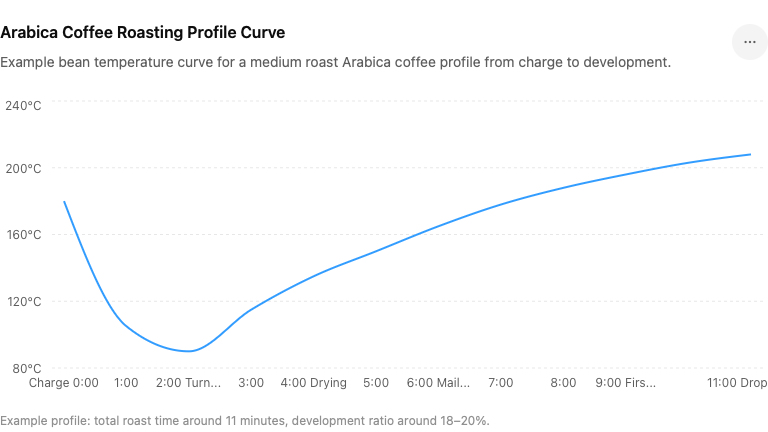
| Phase | Time | Bean Temp | Goal |
|---|---|---|---|
| Charge | 0:00 | 180°C | Start roast |
| Turning Point | 1:30–2:00 | 85–95°C | Heat absorption |
| Drying Phase | 0:00–4:30 | →150°C | Remove moisture, hay → bread aroma |
| Yellowing | ~4:30 | 150–160°C | Color change begins |
| Maillard Phase | 4:30–9:00 | 160–195°C | Sweetness, body, caramelization |
| First Crack | ~9:00 | 195–200°C | Structure expansion |
| Development | 9:00–11:00 | 200–208°C | Balance acidity & sweetness |
| Drop | ~11:00 | 205–210°C | Medium roast |
How First Crack Changes Depending on the Coffee
Not all first cracks sound or behave the same, and this catches a lot of newer roasters off guard.
Dense, high-grown beans tend to crack sharply and in a concentrated burst. Ethiopian heirlooms, top-lot Kenyans — you often hear a clear rolling crack within a tight window. This makes DTR management slightly more forgiving because the crack is easier to identify.
Lower-density beans or older crop may crack weakly, scattered over a longer window, with individual pops that are harder to identify as “first crack starting.” Roasting these requires more attention and better logging to know where development begins.
Naturals versus washed also behave differently. Naturals carry more residual sugars from the fruit drying on the bean. They often crack a little earlier relative to temperature, and the development phase is more reactive — small changes in heat input during development can swing the flavor profile significantly.
For baristas: if a natural and a washed coffee from the same region taste dramatically different even at the same grind and brew ratio, ask the roaster about their development strategy for each. The answer usually explains what you’re experiencing.
What This Means for Your Brewing Decisions
Understanding first crack isn’t just roaster knowledge. It shapes how you approach a coffee on the bar.
If you know a coffee is lightly roasted — early drop, relatively short development — you can anticipate higher acidity and more delicate aromatics. Brewing hotter (93°C to 96°C) often helps extract more sweetness and body to balance the brightness. A coarser grind at a slower brew time can also help, depending on the method.
If you know a coffee has more development time, the sugars are more fully caramelized and the acidity is softer. You have more flexibility in brew temperature. A slightly cooler brew can actually highlight the sweetness without making the cup flat.
This is why the best barista-roaster relationships are built on conversation, not just tasting notes on a bag. When you understand the roast decisions behind a coffee, you stop guessing at the brew recipe and start making informed adjustments.
The Takeaway
First crack is the moment a coffee bean physically transforms — cell walls rupture, chemistry accelerates, and the roaster’s clock really starts. Every decision made in the minutes after that sound defines what lands in the cup: the brightness or the body, the fruit clarity or the caramel depth, the complexity or the consistency.
For baristas and roasters working in specialty coffee, treating first crack as just a checkpoint misses the point. It’s the start of the most consequential window in the whole roast. The better you understand what happens in that window, the better equipped you are to make decisions on either side of the bar.
If you want to go deeper, talk to your roaster. Ask where on the profile they’re landing and why. The conversation will make you better at both jobs.