


If you have ever looked closely at a bag of coffee and wondered what “100% Arabica” actually means — or why some coffees cost significantly more than others — the answer almost always starts here.
Arabica and Robusta are the two species of coffee that make up the vast majority of everything grown, traded, and brewed in the world. Understanding the difference between them is not just trivia. It changes how you read a coffee label, how you evaluate a café’s menu, and ultimately how you choose what goes in your cup.
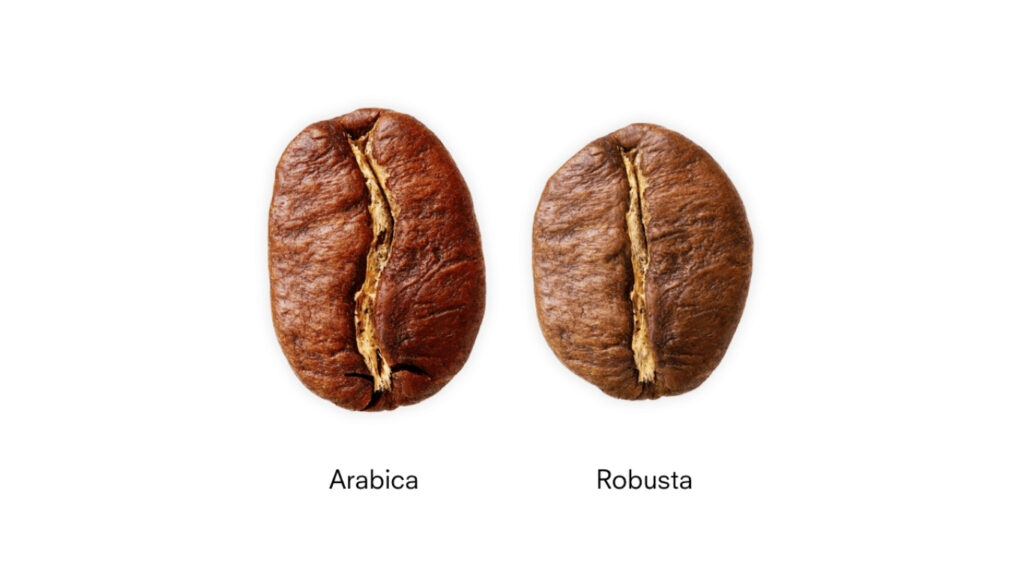
The Basics: Two Species, One Family
Both Arabica (Coffea arabica) and Robusta (Coffea canephora) are species of the flowering plant genus Coffea. They are related but genetically distinct — different enough that they grow in different climates, ripen at different rates, contain different chemical profiles, and produce completely different flavour experiences.
Arabica accounts for roughly 60% of global coffee production. Robusta makes up most of the remaining 40%. A third species, Liberica, exists in smaller quantities and is notably cultivated in Malaysia — but it falls outside the scope of most everyday coffee conversations.
Where They Grow
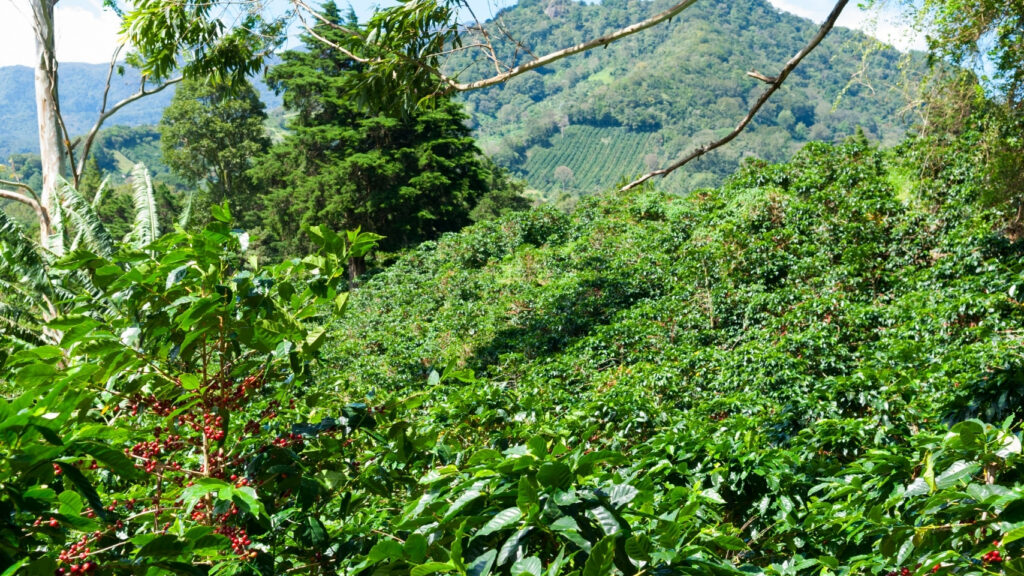
Arabica is a high-altitude plant. It thrives between 600 and 2,200 metres above sea level, in cool, stable temperatures between 15–24°C with consistent rainfall. The highlands of Ethiopia, Colombia, Kenya, Guatemala, and Yemen are classic Arabica environments. Growing at altitude slows the coffee cherry’s development, giving the bean more time to accumulate complex sugars and organic acids — which directly translates to flavour complexity in the cup.
Arabica is also more vulnerable. It is susceptible to coffee leaf rust, pests, and disease. It needs shade, careful farming, and specific microclimates. This fragility is part of why it costs more.
Robusta is the hardier species. It grows at lower altitudes — typically below 800 metres — in hotter, more humid climates. Vietnam is the world’s largest Robusta producer, followed by Uganda, Indonesia, and Brazil. Robusta plants produce more cherries per tree, ripen faster, and resist disease more effectively than Arabica. The higher caffeine content in Robusta beans actually serves as a natural insect repellent — the plant produces it as a defence mechanism.
Flavour: The Most Important Difference
This is where the two species diverge most meaningfully for the drinker.
Arabica is known for its complexity. Well-grown and well-roasted Arabica can express notes of fruit, citrus, berries, floral tones, caramel, honey, chocolate, and tea. Its acidity is perceived as brightness rather than harshness — one of the qualities that specialty coffee buyers pursue most. The flavour profile shifts significantly based on origin, processing method, and roast level, which is why single origin Arabica coffees are so interesting to explore.
Robusta has a heavier, earthier, more bitter profile. The flavour is often described as woody, grainy, rubbery, or dark chocolate at its best — and harsh or medicinal at its worst. The bitterness is structural rather than accidental: Robusta contains roughly twice the caffeine of Arabica and significantly more chlorogenic acids, both of which contribute to its characteristic sharpness.
This does not mean Robusta has no place in quality coffee. High-grade Robusta, properly processed, contributes body, crema, and intensity to espresso blends — which is why many traditional Italian espresso formulas include a Robusta component. The key word is quality. The poorest-grade commercial Robusta gives the species an unfair reputation.
Caffeine: Who Has More?
Robusta wins — by a significant margin.
A typical Arabica bean contains between 1.2% and 1.5% caffeine by dry weight. Robusta beans contain between 2.2% and 2.7%. That is nearly double.
For drinkers who reach for coffee primarily for the energy lift, Robusta-heavy blends deliver more caffeine per cup. Instant coffee and many commercial espresso blends lean on Robusta partly for this reason.
For specialty coffee drinkers focused on flavour, Arabica’s lower caffeine content is actually considered a feature — it means the cup is less bitter and more nuanced at the same extraction strength.
Price: Why Arabica Costs More
Three factors drive Arabica’s higher market price:
Growing conditions. Arabica requires altitude, specific microclimates, and careful farming. Yield per hectare is lower than Robusta.
Vulnerability. Disease, climate change, and frost events — like Brazil’s recurring cold snaps — can devastate Arabica crops and cause significant price spikes on global commodity markets.
Processing and quality sorting. Specialty Arabica, in particular, requires meticulous post-harvest processing — washing, drying, sorting, and grading — that adds cost at the farm level.
Robusta’s lower price reflects its greater ease of cultivation and higher yields, not necessarily lower quality in all cases. But price does often track with flavor potential, and for most specialty applications, Arabica is the reference standard.
What About Blends?
Many of the coffees you encounter daily — especially espresso blends — are a combination of both species. A roastery might blend 80% Arabica with 20% Robusta to build a base espresso with the complexity of Arabica and the body and crema thickness that a Robusta component provides.
Understanding this helps when you see “100% Arabica” on a bag. It is a quality signal — a declaration that no Robusta has been added to boost caffeine, cut cost, or increase yield. In the specialty coffee world, single origin, traceable Arabica is the benchmark.
Which Is Better?
Neither. They serve different purposes and suit different preferences.
If you value flavour complexity, brightness, and origin character — Arabica, ideally specialty-grade, is where you want to be. If you prioritise a strong, bold, high-caffeine cup and appreciate heavier body, a quality Robusta or an Arabica-Robusta blend may actually fit better.
What matters most is knowing what you are drinking, choosing it intentionally, and ensuring that whatever species is in your cup was sourced with care and roasted properly. Low-quality beans of either species produce poor coffee. High-quality beans, handled well from farm to cup, produce something worth paying attention to.
What Lighthouse Coffee Roasts
At Lighthouse Coffee, our roastery in Perai, Penang focuses on specialty-grade Arabica sourced from traceable origins. Every coffee we roast carries a roast date, and we work with beans selected for quality, consistency, and flavour potential.
Whether you are a home brewer looking to understand what you are drinking, a barista building knowledge, or a café owner reviewing your bean sourcing — we are happy to share what we know and what we offer.
📞 WhatsApp us to ask about our current green bean selections, wholesale pricing, and roasting schedule.
Related reads:
What Makes Specialty Coffee Different? Understanding Coffee Grades and Quality
Light vs. Dark Roast: A Complete Guide to Understanding Roast Profiles