


What Is Honey Process Coffee? A Simple Guide to the Sweetest Method in Specialty Coffee
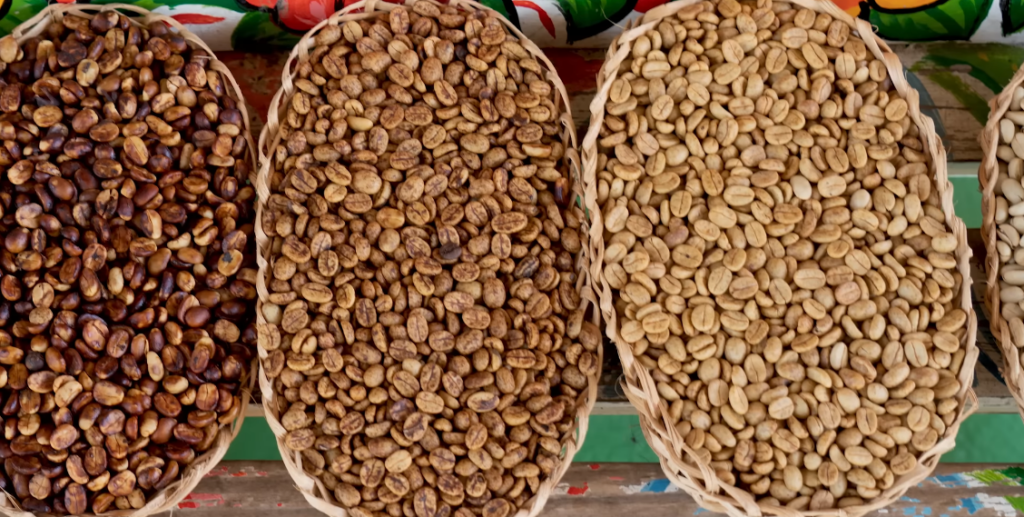
If you’ve picked up a bag of specialty coffee and noticed “honey process” on the label, you might have wondered whether someone actually added honey to the beans. They didn’t. The name is one of the more misleading things in coffee, and understanding what it actually means changes how you taste the cup.
Honey process coffee sits between washed and natural processing. It’s not about added flavors. It’s about how much of the coffee cherry’s fruit is left on the bean while it dries. That layer of sticky fruit pulp left behind is what gives honey process coffee its character, and why it tends to taste noticeably sweeter and more complex than most washed coffees.
Here’s what it actually means, why producers use it, and how the different levels show up in your cup.
What “Processing” Actually Means in Coffee
Before honey process makes sense, you need a quick picture of how coffee goes from fruit to the bag in your hands.
Coffee starts as a cherry. Inside that cherry is the seed, which is what we roast and brew. After harvesting, producers have to remove the fruit and dry the seed before it can be milled, exported, and roasted. The method they use to do this is called processing, and it shapes the flavor of every coffee more than most people realize.
There are three main approaches. Washed processing removes all the fruit before drying, giving you a cleaner cup where the bean’s natural characteristics come through clearly. Natural processing dries the whole cherry intact, letting the fruit ferment around the seed, which produces heavier, fruitier, sometimes wine-like flavors. Honey process lands in the middle. The outer skin is removed, but some amount of the mucilage, that sticky, sugary layer of fruit pulp, is left on the bean during drying.
How much mucilage stays on is what determines the “level” of honey process. And that’s where yellow, red, and black come in.
Yellow, Red, and Black Honey: What the Colors Mean
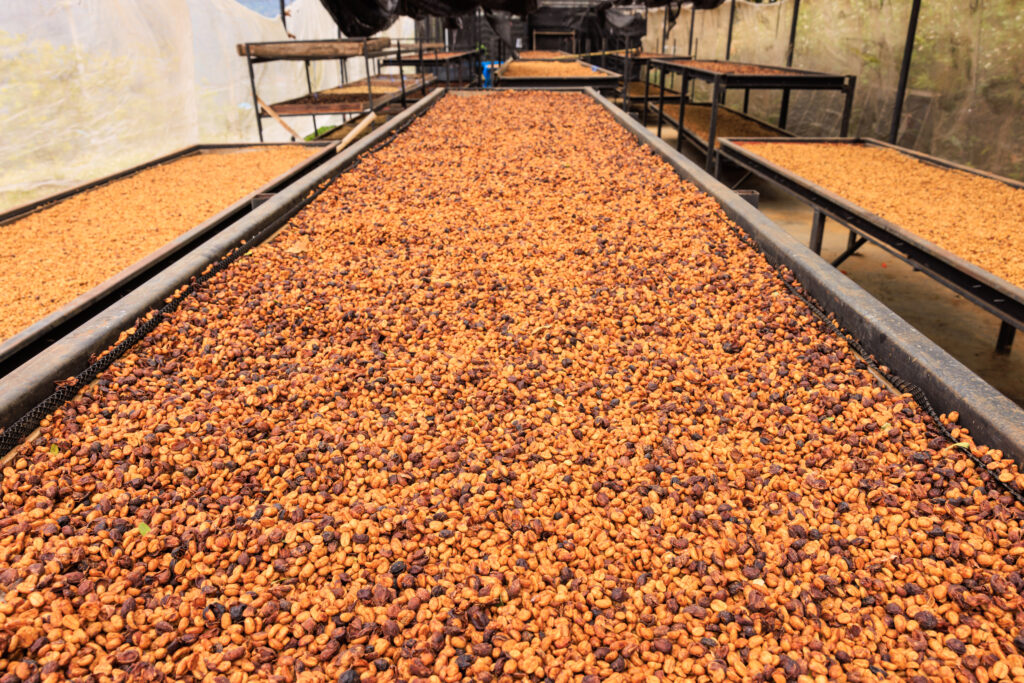
The colors aren’t random. They describe how much fruit was left on the bean and how long it took to dry.
Yellow honey has the least mucilage. Producers remove most of it, leaving only a thin coating. The beans dry quickly, usually four to eight days, with lots of airflow and regular turning to prevent fermentation from going too far. The result is a coffee that tastes closer to washed than natural. You get a bit of extra sweetness and body, but the profile stays relatively clean and bright.
Red honey keeps more mucilage on. Drying takes longer, around twelve to fifteen days, and the beans need shade or reduced airflow to slow things down. The extra contact time with the fruit pulls more sweetness into the bean. Cups tend to be rounder, with stone fruit or caramel notes and more body than yellow honey.
Black honey keeps nearly all the mucilage intact, similar to natural processing but with the skin removed. Drying can take up to thirty days. The extended fermentation creates the most complex, fruit-forward profiles of the three. Some describe it as jammy or syrupy. It’s also the hardest to produce consistently because there’s more that can go wrong when you’re managing that much organic matter for that long in the open air.
There’s also white honey, which sits below yellow and is the least common. It keeps almost no mucilage, producing a cup that’s very close to washed but with slightly more body.
Why Does Honey Process Taste Sweet?
The sugars in the fruit pulp don’t fully transfer into the bean the way a lot of people assume. What actually happens is more about how the mucilage affects the drying environment and the fermentation that takes place on the bean’s surface.
During drying, the sugars in the remaining mucilage undergo a mild fermentation. This changes the chemical composition of the bean’s outer layers and influences the flavor compounds that develop during roasting. The result is often perceived as sweetness, fruitiness, or a rounded body that you don’t typically get from washed coffees.
It’s also worth noting that the sweetness in honey process coffee depends heavily on roast level. A lighter roast will preserve more of those delicate fruit-derived compounds. A darker roast will mask them. This is one reason why honey process coffees are almost always roasted light to medium in specialty coffee.
Where Does Honey Process Come From?
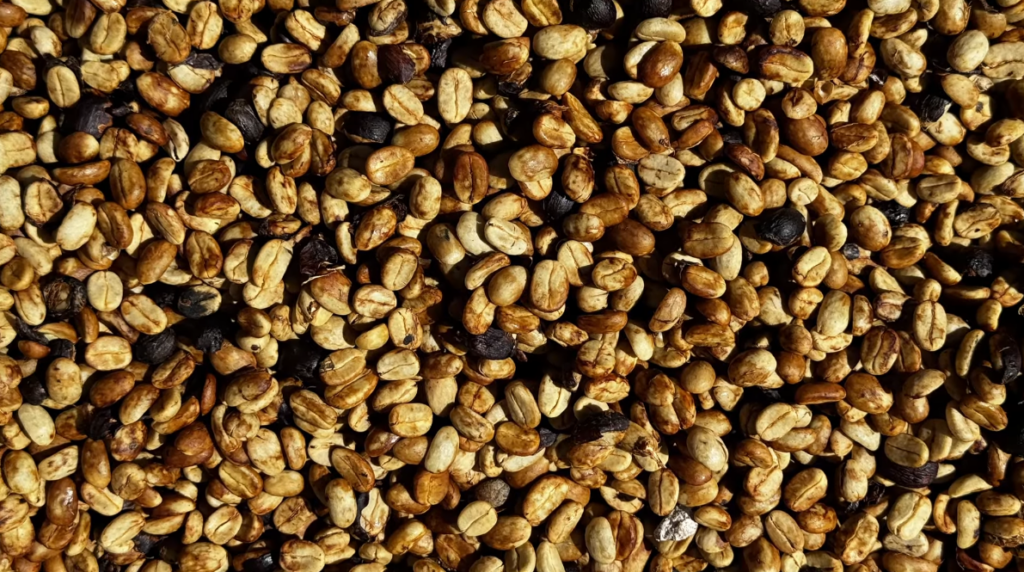
Honey process was developed in Costa Rica in the early 2000s as a practical solution to a real problem. Costa Rican producers were facing increasingly strict environmental regulations around the wastewater produced by washed processing. Washing coffee uses large amounts of water, and the runoff, called coffee effluent, is highly acidic and damaging to local waterways.
Honey process used less water and produced less waste, which made it easier to comply with environmental rules. The fact that it also produced distinctive, market-friendly flavors was a happy outcome that made it worth pursuing beyond the regulatory requirement.
Since then, honey process has spread across Central America, parts of South America, and increasingly into Southeast Asian origins. You’ll find it on Ethiopian lots from producers experimenting beyond their natural and washed traditions, and on beans from growing regions in Indonesia and Myanmar. Wherever producers are chasing complexity and sweetness without the full weight of a natural process, honey tends to show up.
How to Brew Honey Process Coffee
Honey process coffees are forgiving to brew, but they reward a few specific adjustments.
Because they tend toward sweetness and body rather than brightness, you can be a bit more flexible with your water temperature. Brewing around 90 to 93 degrees Celsius works well for most honey process lots, particularly for pour over and filter methods. Going hotter can push the fruit notes into something bitter or muddy if the coffee was processed toward the red or black end of the spectrum.
For espresso, honey process coffees can pull beautifully as a single origin shot or in a blend where you want to round out a brighter natural or add complexity to a cleaner washed base. They tend to extract evenly without the inconsistency you sometimes get from fully natural coffees.
If you’re tasting notes on the label that mention stone fruit, brown sugar, caramel, or anything described as “jam-like,” you’re almost certainly looking at a honey process. Let the coffee cool slightly before you evaluate it. A lot of the sweetness becomes clearer as the temperature drops.
Should You Buy Honey Process Coffee?
If you find washed coffees too sharp or tart, and full natural coffees too heavy and fermented, honey process is worth exploring. It sits in a range that a lot of specialty coffee drinkers find immediately accessible.
The range within honey process is wide enough that you can work through it systematically. Start with a yellow honey if you prefer clarity and want to taste the origin character without too much fruit influence. Move to red honey if you want more body and sweetness. Try a black honey if you’re ready for something more complex and fruit-forward.
At Lighthouse, we pay close attention to how a coffee was processed before we decide how to roast it. The processing method is part of the story of where a coffee comes from and how it was cared for before it reached us. When you understand that, a label like “red honey, Yirgacheffe” or “yellow honey, Boquete” stops being just a description and starts being useful information about what to expect in the cup.
Conclusion
Honey process isn’t a gimmick or a flavor additive. It’s a specific set of decisions made on a drying bed, by a producer, weeks before the coffee reaches a roaster. Those decisions shape everything about how the coffee tastes. Understanding the spectrum from yellow to black gives you a real tool for navigating the specialty coffee shelf, not just a fun fact to drop in conversation.
The next time you see “honey process” on a bag, look for the color. That one word tells you a lot about what’s in the cup before you even open the bag.
Want to go deeper? Come into the Lighthouse Academy and we’ll walk you through a cupping that puts yellow, red, and black honey side by side. Tasting the difference is more useful than reading about it.
For more article
What Is Natural Processing? How the Sun Turns Coffee Cherries into Flavor
What Is Washed Processing? A Beginner’s Guide to One of Coffee’s Most Important Methods
Pour Over Coffee for Beginners: How to Brew Your First Great Cup