


Roast Date vs Expiry Date — Are You Reading the Right One?
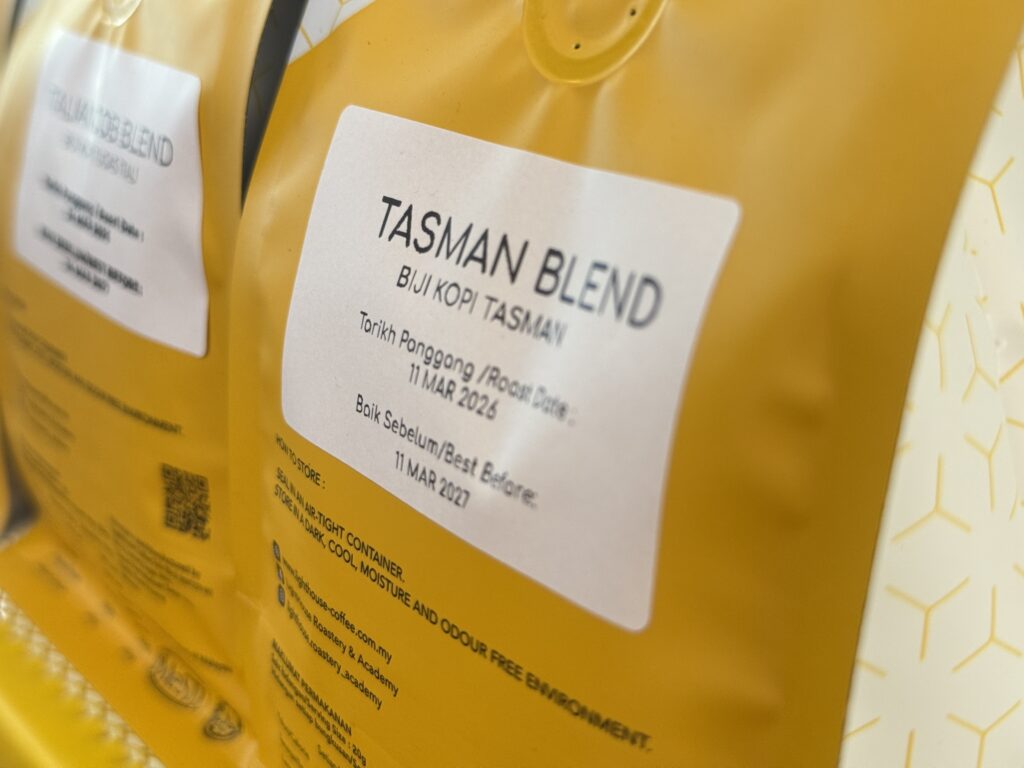
Pick up a bag of coffee at a supermarket and you’ll find an expiry date printed clearly on the back. Pick up a bag of specialty coffee from a good roaster and you’ll find something different: a roast date.
These are not the same thing. And if you’ve been choosing your coffee based on the expiry date, you’ve been using the wrong signal.
This isn’t a technicality. It’s the difference between coffee that tastes vibrant and complex, and coffee that tastes flat before you’ve even opened the bag.
What the Expiry Date Actually Tells You
The expiry date — sometimes labelled “Best Before” or “BB” — tells you when the manufacturer believes the product will no longer be safe or acceptable to consume under standard storage conditions.
For most food products, this is genuinely useful information. For coffee, it is almost meaningless as a freshness indicator.
Here’s why: specialty coffee typically has a best-before date set 12 to 24 months from the roast date. A bag roasted in January 2025 might carry an expiry of December 2026. Technically, that coffee is still “within date” nearly two years later.
But ask any specialty coffee roaster or trained barista: coffee roasted 18 months ago that has never been opened is not fresh coffee. It is stale coffee that hasn’t expired yet. Those are two very different things.
The expiry date is a food safety metric. It was never designed to tell you whether your coffee tastes good.
What the Roast Date Actually Tells You
The roast date is the date the green (raw) coffee beans were roasted. It is the most important piece of information on a specialty coffee bag, and it is the number you should be reading.
Roasting transforms coffee chemically and physically. From the moment beans come out of the roaster, a countdown begins — not to spoilage, but to peak flavour.
Here’s the general timeline for whole bean specialty coffee stored in a sealed, valve-equipped bag at room temperature:
| Days After Roast | What’s Happening |
|---|---|
| Day 1–3 | Very active CO₂ off-gassing; coffee is too gassy for optimal extraction |
| Day 4–10 | Peak flavour window begins — ideal for most brew methods |
| Day 10–21 | Still excellent; flavour gradually softens and rounds out |
| Day 21–45 | Good to drink; complexity starts to diminish |
| Day 45–90 | Acceptable; noticeably flatter, less aromatic |
| Day 90+ | Still safe, but most of what made it special is gone |
For espresso specifically, many roasters and baristas recommend waiting 10–14 days post-roast before dialling in. The excess CO₂ in very fresh beans interferes with extraction and can cause uneven shots and excessive crema that collapses quickly.
For filter and pour-over, the window opens a little earlier — around day 4–7 — because the brewing method is more forgiving.
Why Supermarket Coffee Doesn’t Show a Roast Date
If roast date is so important, why don’t all coffee bags show it?
The honest answer: because most commercial coffee is not sold on freshness. It is sold on price, familiarity, and shelf life. A supermarket coffee brand that shows a roast date is also implicitly telling you how long that coffee has been sitting in a warehouse, on a shipping container, and on a shelf — and that number is often uncomfortable.
Mass-market coffee is typically roasted, packaged, and distributed over weeks or months before reaching the consumer. Printing a roast date would make it immediately clear that the coffee you’re buying is already 3, 6, or 9 months old. Best-before dates, by contrast, sound reassuringly far away.
Specialty roasters show roast dates because freshness is a core part of what they’re selling. The roast date is a signal of transparency and pride — it’s the roaster saying: we roasted this recently, and we want you to know it.
How to Read a Roast Date on the Bag
Roast dates are usually printed or stamped on the bottom or back of the bag. They may appear as:
- Roasted on: DD/MM/YYYY
- Roast date: DD MMM YYYY (e.g., 05 Apr 2026)
- Roasted: Month Year (less specific, but still useful)
- A batch code with an embedded date (less common on retail bags, more common on wholesale)
Some roasters also include a “Best Enjoyed By” or “Drink By” date calculated from the roast date — typically set at 60–90 days. This is a freshness recommendation, not a safety deadline.
What you’re looking for: beans roasted within the last 4–6 weeks for everyday drinking. For espresso, 10–21 days is the sweet spot. For filter, 4–14 days.
If a bag has no roast date and only a best-before date — and the best-before is more than 6 months away — that tells you something important about how the coffee was produced and stored.
A Note for Home Brewers: Buy Less, Buy More Often
One of the most common freshness mistakes isn’t buying old coffee — it’s buying too much at once.
A 1kg bag of coffee sounds economical. But if you’re brewing one or two cups a day, that bag might last you 6–8 weeks. By the time you reach the bottom third, the coffee roasted on day one of that bag is now 6+ weeks old and well past its best.
A better approach: buy 200g or 250g at a time, more frequently. If you find a roast you love, order it every 2–3 weeks. You’ll almost always be drinking it at or near peak.
This is one of the advantages of buying direct from a local roaster — you can get small, frequent, freshly roasted batches rather than a single large purchase that gradually goes stale.
A Note for Cafés and Baristas: Date Your Stock
In a commercial setting, coffee rotation matters enormously. A bag that arrives fresh and sits in storage for 3 weeks before being opened is now already past its peak window when you start using it.
Best practices for café stock management:
- Date your bags the moment they arrive, not the day they’re opened
- Rotate stock so the oldest bags are always used first
- Communicate with your roaster about order frequency — weekly small orders almost always outperform monthly bulk orders for flavour consistency
- Track your extraction data — if your espresso parameters are drifting and nothing has changed in your process, the age of your coffee may be the variable
Storing coffee properly in Malaysia’s climate adds another layer of complexity. Read Chapter 5: Living in the Tropics? Your Coffee Is Going Stale Faster Than You Think →
The expiry date tells you when to throw it away. The roast date tells you when to drink it.
Read the roast date.
This post is part of our series “The Secrets Inside Your Coffee Bag”:
- Chapter 1: That Little Circle on Your Coffee Bag Is Not a Sniff Hole →
- Chapter 2: Should You Seal the Valve? Whole Beans vs Ground Coffee →
- Chapter 3: What Happens to Your Coffee Bag on a Plane? →
- Chapter 4: Roast Date vs Expiry Date — Are You Reading the Right One? ← You are here
- Chapter 5: Living in the Tropics? Your Coffee Is Going Stale Faster Than You Think →