


Should You Seal the Valve? Whole Beans vs Ground Coffee
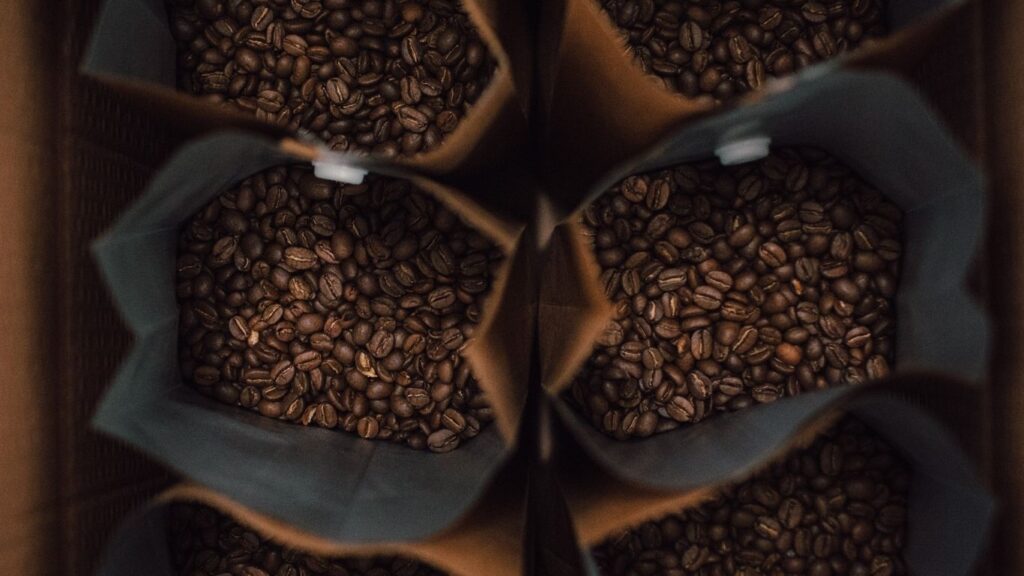
If you’ve been reading coffee forums long enough, you’ve probably seen this debate: should you tape over the one-way valve on your coffee bag?
Some people swear by it. Others think it’s unnecessary. A few have tried it and noticed their bag started looking oddly bloated.
Like most coffee questions, the honest answer is: it depends — specifically, on whether you’re storing whole beans or ground coffee. And the difference matters more than you might think.
A Quick Recap: What the Valve Does
In case you’re jumping straight to this post — the small circular bump on your coffee bag is a one-way degassing valve. It allows CO₂ released by freshly roasted coffee to escape, while preventing oxygen from getting back in.
Not sure what a degassing valve is? Read Chapter 1: That Little Circle on Your Coffee Bag Is Not a Sniff Hole →
The key question isn’t whether the valve works. It does. The question is whether you need to do anything with it based on what’s inside your bag.
Whole Beans: Leave the Valve Open
Whole bean coffee degasses significantly after roasting. The cellular structure of the bean is still largely intact, which means CO₂ is trapped inside and releases slowly over days — sometimes up to two weeks after roasting.
This steady, gradual off-gassing is actually a sign of freshness. It means the beans haven’t been sitting in a warehouse for months. It means the roast is recent.
If you seal or tape over the valve on a bag of whole beans:
- CO₂ has nowhere to go
- Pressure builds inside the bag
- Over time, this can stress the seams and compromise the heat seal
- In warm climates like Malaysia, this process is accelerated
More practically, the pressure can cause the bag to look puffed up and feel taut — which might make you think something’s wrong when the coffee is actually perfectly fresh.
The verdict for whole beans: leave the valve open and untouched.
Ground Coffee: A Different Story
Ground coffee is a different situation entirely.
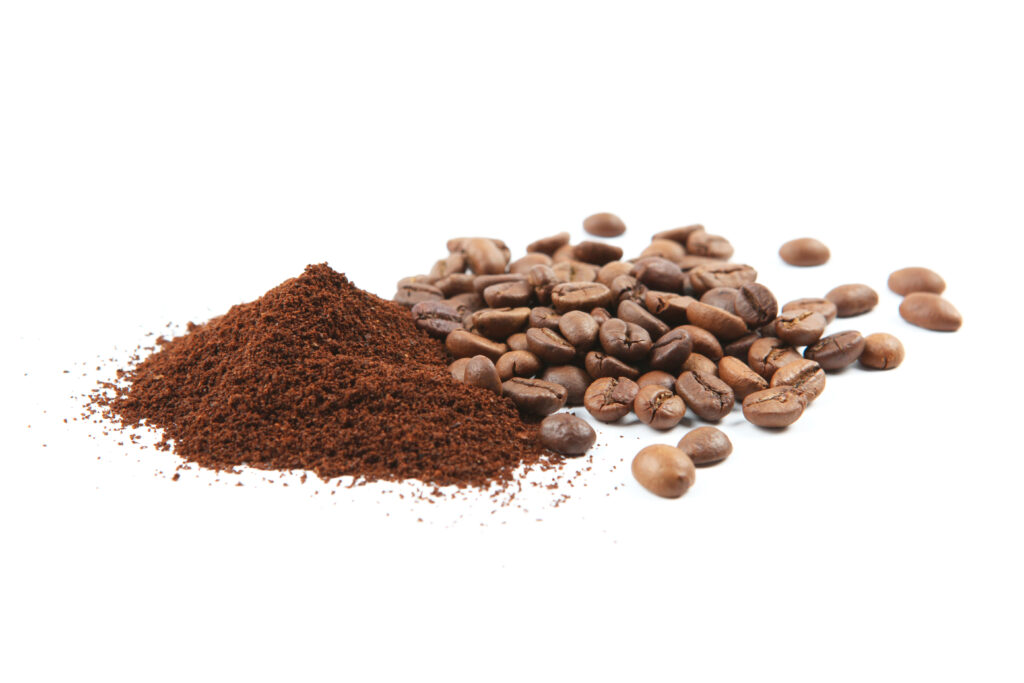
When you grind coffee, you dramatically increase its surface area. A single whole bean becomes hundreds of tiny particles, each one now exposed to the surrounding environment. The result? Ground coffee degasses much faster — typically within 30 to 60 minutes of grinding, most of the CO₂ has already escaped.
This is why pre-ground coffee bags often have a valve that feels almost flat when you buy them. By the time it’s been packaged and shipped, the off-gassing is largely done.
Here’s where the calculus changes: once ground coffee has finished degassing, the valve is no longer doing active work. What becomes the bigger threat is oxygen exposure — and the valve, while one-way, is still a very small potential entry point if the disc mechanism is worn or the bag is compressed repeatedly.
For pre-ground coffee that’s already degassed:
- The valve poses minimal risk on its own
- But if you’re transferring to a storage container, choose an airtight one
- If keeping in the original bag, squeeze out excess air before resealing the top — the valve can’t help you once the CO₂ has gone
The verdict for ground coffee: the valve matters less, but proper resealing matters more.
What About After You’ve Opened the Bag?
Once you’ve opened a bag — whether whole bean or ground — the dynamics shift again.
For whole beans, the bag’s top seal is now open. The valve still works, but you’re likely introducing small amounts of air each time you open the bag. The best practice:
- Fold the top of the bag down tightly
- Use the bag’s built-in zip lock if it has one, or a clip
- Don’t squeeze the bag — this forces air past the valve disc
- Store away from heat and direct light
For ground coffee, once opened, use it within 1–2 weeks if stored in the original bag, or transfer to a proper airtight container. At this stage, the valve is largely irrelevant.
The Airtight Container Question
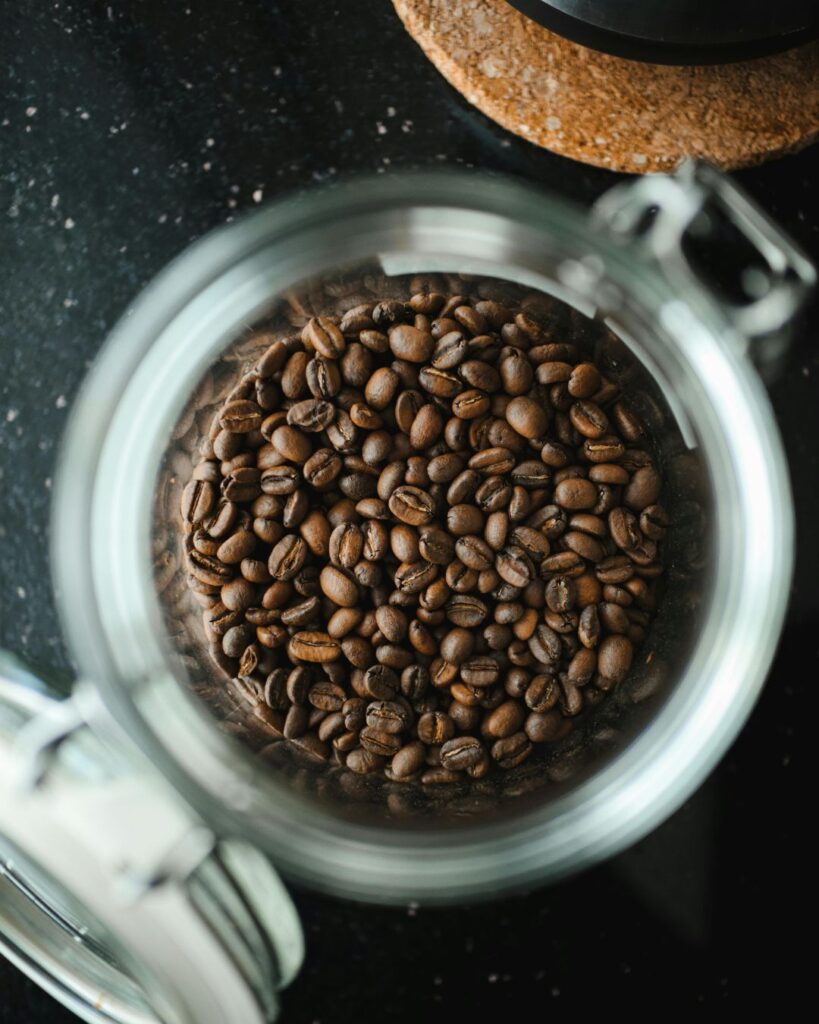
Many coffee enthusiasts transfer their beans into a dedicated airtight canister — typically ceramic or stainless steel with a one-way valve built into the lid. These work well, but a few things worth knowing:
- Not all “airtight” canisters are actually airtight. Test yours by placing a small piece of tissue near the lid seal — if you feel air movement when pressing the canister, it’s not sealed properly.
- For whole beans within the first week of roasting, a canister with a built-in degassing valve is ideal. Without one, pressure from off-gassing can cause the lid to loosen over time.
- If your canister has no valve, wait until the beans are at least 5–7 days post-roast before transferring — by then, the most intense degassing is done.
Practical Summary
| Scenario | What to do |
|---|---|
| Whole beans, freshly roasted | Leave the bag’s valve open, store sealed at the top |
| Whole beans, 1+ week after roast | Valve is less active; standard airtight storage works |
| Ground coffee, pre-packaged | Valve mostly inactive; focus on resealing the bag properly |
| Ground coffee, after opening | Transfer to airtight container; use within 1–2 weeks |
| Any coffee in tropical heat | Priorities cool, dark storage — heat accelerates everything |
One More Thing Worth Knowing
The valve on your coffee bag is not a quality-control button. Pressing it, sealing it, or obsessing over it won’t dramatically extend the life of your coffee if the rest of your storage is poor.
Temperature and light do more damage to coffee freshness than a slightly imperfect valve. Keep your coffee somewhere cool and dark — a cupboard away from the stove, not a glass jar on the counter by the window — and you’ll already be ahead of most home brewers.
Speaking of temperature: if you’re in Malaysia, your coffee is fighting conditions that most coffee storage guides weren’t written for. Read Chapter 5: Living in the Tropics? Your Coffee Is Going Stale Faster Than You Think →
This post is part of our series “The Secrets Inside Your Coffee Bag”:
- Chapter 1: That Little Circle on Your Coffee Bag Is Not a Sniff Hole →
- Chapter 2: Should You Seal the Valve? Whole Beans vs Ground Coffee ← You are here
- Chapter 3: What Happens to Your Coffee Bag on a Plane? →
- Chapter 4: Roast Date vs Expiry Date — Are You Reading the Right One? →
- Chapter 5: Living in the Tropics? Your Coffee Is Going Stale Faster Than You Think →